
Choosing a Water Tank Electric Brush supplier in 2026 requires more than comparing price lists. Buyers need to know how the brush handles sediment, narrow tank corners, and repeated wet use. A useful market signal comes from Grand View Research’s pressure washer market report. It estimated the global market at about USD 2.5 billion in 2023 and projected 4.3% annual growth from 2024 to 2030. This is not a direct measure of tank-cleaning brushes. It does, however, point to sustained demand for powered cleaning equipment.
For procurement teams, supplier claims should be checked against practical details. Ask for the brush’s voltage, battery runtime, head dimensions, material compatibility, and available replacement parts. Request test results or a product demonstration using a tank surface similar to yours. A brush that performs well on smooth plastic may behave differently on textured walls or around fittings. Details matter.
This guide compares suppliers through product capability, manufacturing transparency, quality controls, and after-sales support. It also considers whether specifications are clear enough for maintenance teams to verify. A polished catalog is helpful, but it cannot replace consistent performance data. Some listings still leave important questions unanswered, and buyers should treat that as a reason to ask more—not assume less. Supplier rankings can change with region, order volume, and service needs, so use this overview as a starting point for careful evaluation.
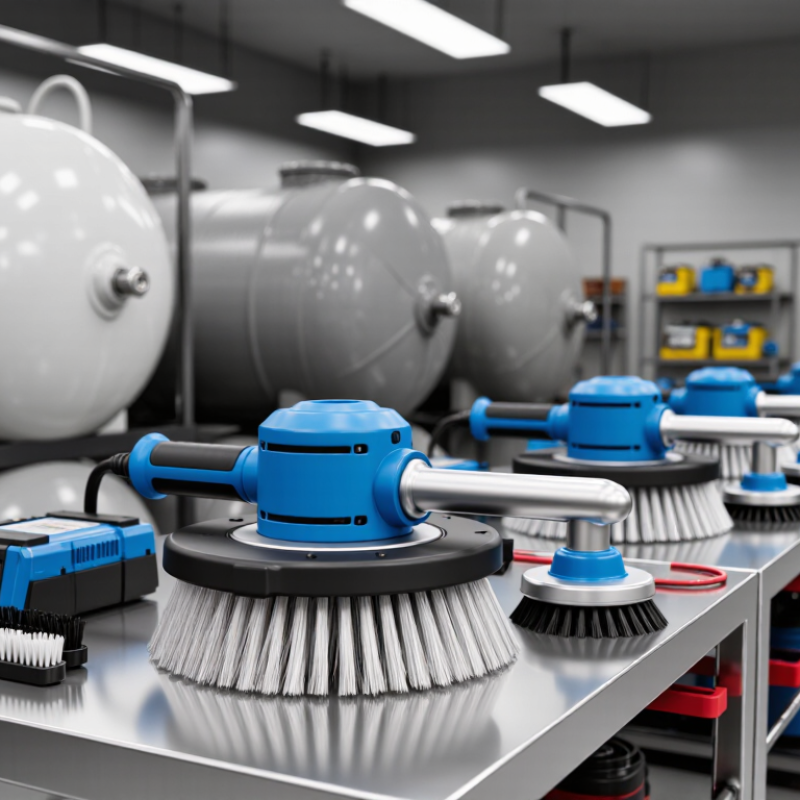
Water tank electric brushes use a powered rotating head to loosen biofilm, sediment, and mineral deposits from tank walls, seams, and fittings. Operators can choose bristle stiffness and head shape to suit coated steel, concrete, or plastic surfaces. A compact brush helps reach around ladders and outlet pipes, while longer handles reduce repeated repositioning. It is a cleaning tool, not a disinfection system.
The CDC-led analysis published in Emerging Infectious Diseases estimated 7.15 million waterborne illnesses annually in the United States. That estimate covers many exposure routes, not tank cleaning alone. Still, it shows why storage hygiene deserves careful attention. Brushing can remove attached material before rinsing and inspection, but cleaning quality depends on safe access, suitable brush contact, and proper waste handling. A brush alone is not a treatment plan.
For potable-water tanks, operators should check that brush materials suit the tank lining and intended use. Excessive pressure may scratch coatings or leave debris in corners. That detail is easy to miss. Inspect the surface after brushing, then follow the facility’s established cleaning and disinfection procedures. Tank shape, deposit type, and access limits all affect tool choice; there is no universal brush head that works equally well everywhere.

2026 Top Water Tank Electric Brush Suppliers
Key Features That Distinguish Leading Electric Brush Suppliers
Leading water-tank electric brush suppliers stand out through clear, verifiable specifications, not polished promises. They state brush-head diameter, shaft reach, motor speed, power source, and wet-use limits in plain language. These details help buyers match a tool to tank openings, wall materials, and cleaning schedules. Specifics matter.
Material choice is another useful signal. Suppliers should identify bristle stiffness, shaft construction, and replaceable parts, then explain which surfaces each option suits. A soft head may protect a coated tank, while firmer bristles can remove settled residue from more robust surfaces. But suitability depends on tank condition; no brush is universal. Ask for dimensional drawings and maintenance instructions, not just catalog photos. Reliable suppliers also explain how they inspect motor performance and electrical connections before shipment. Consistent answers make comparisons more meaningful.
After-sales support deserves close attention. Check whether replacement heads are available and whether the supplier provides clear troubleshooting guidance. A detailed warranty is useful, but it cannot show how quickly a supplier handles a real parts request. One detail is easy to overlook: brush reach should be checked against the tank’s actual access opening. Even careful specifications can leave room for error, so a sample unit or a written fit confirmation may prevent an awkward mismatch.
2026 Top Water Tank Electric Brush Suppliers
How to Evaluate Water Tank Electric Brush Manufacturers in 2026
The 2023 WHO/UNICEF Joint Monitoring Programme report estimated that 2.2 billion people lacked safely managed drinking water in 2022. That figure is not a brush-performance metric. It does underline why tank-cleaning equipment deserves careful evaluation. Ask manufacturers for documented tests covering brush wear, motor protection, shaft stability, and cleaning performance on surfaces similar to yours. Check that bristles and seals suit the intended water and tank materials.
Compare suppliers using your actual tank dimensions, access points, and residue type. A brush that works in a showroom may struggle against a curved wall or a heavy deposit. Request a wet-run demonstration, operating instructions, maintenance intervals, and a clear list of replaceable parts. Review material declarations and test records, rather than relying on broad claims such as “industrial grade.” Some supplier data sheets leave out real operating conditions; that is worth questioning.
Tips: Ask for a video using a comparable tank. Confirm replacement-brush availability and warranty terms in writing. Check noise, vibration, and cable handling during a live test. Short trials reveal a lot.
Compare a manufacturer’s test evidence against standardized water-ingress benchmarks. Under IEC 60529, IPX5 uses a 6.3 mm nozzle at 12.5 L/min, while IPX6 uses a 12.5 mm nozzle at 100 L/min. Ask suppliers for applicable test reports and confirm the required protection level for your product’s intended use.
Water-flow values shown are IEC 60529 test conditions, not supplier performance ratings. Verify the applicable standard edition and test scope with the manufacturer.
In 2026, water tank electric brush suppliers are spread across manufacturing regions with different strengths. Some coastal hubs offer dense networks for molded housings, motor assembly, and packaging. Other regions focus on metal shafts, battery integration, or smaller production runs. Buyers should check what a supplier makes in-house. A polished catalog proves little.
Factory capability is visible in details. Ask how brush-head wear is tested, how motor speed is checked, and whether water-resistant components are inspected before assembly. Request sample units from a normal production batch, not only hand-finished samples. Useful records include material specifications, inspection steps, and realistic lead times. Small details matter.
Regional labels can mislead. A supplier may assemble locally while sourcing motors or batteries elsewhere. That is not automatically a problem, but it affects traceability and delivery planning. Ask who handles repairs and replacement parts. Then confirm those answers in writing. Some answers will still be vague. Treat that as a reason to investigate further, not as proof of poor quality. For cross-border sourcing, compare shipping distance, production capacity, and communication time alongside unit price. A nearby factory may respond faster, yet still lack the tooling for consistent output.
2026 Top Water Tank Electric Brush Suppliers
Compare suppliers on build quality, customization, pricing, and after-sales support—not just catalog photos. Ask what materials contact the tank and brush head, and request clear specifications for motor power, cable length, and water resistance. A well-fitted brush should reach corners without scraping the tank surface. Check sample photos or arrange a demonstration when possible. Custom options may include handle length, brush stiffness, and connector type. Get dimensions in writing; small mismatches can make a tool awkward to use.
Request itemized pricing that separates the brush, accessories, packaging, and shipping. Compare equivalent configurations, not headline prices. Ask about minimum order quantities and how replacement parts are supplied. Support matters after delivery. Confirm expected response times, warranty coverage, and troubleshooting options before ordering. A fast reply is useful, but it does not prove long-term service quality. No checklist catches every issue, so keep your evaluation notes and verify key details directly.
Tips: Send suppliers the same tank measurements and cleaning requirements. Ask for a quote and product specification sheet in one request. Compare answers side by side. If a detail stays vague, ask again—it may be a sign to slow down.
Comparison of common supplier profiles, not named companies. Product specifications, prices, minimum order quantities, lead times, and service terms vary by model, order, and destination; confirm them directly with each supplier.
| Supplier Profile | Quality Checks | Customization | Pricing & Ordering | Support to Confirm | Best Fit |
|---|---|---|---|---|---|
| Specialist cleaning-equipment manufacturer | Request motor and brush specifications, water-resistance details, operating instructions, and inspection records for the quoted model. | May offer configuration choices such as brush head, pole length, power supply, or accessories; availability is model-specific. | Request a model-specific quotation. Price depends on configuration, order quantity, shipping, and destination. | Confirm warranty scope, replacement-part availability, troubleshooting channels, and service hours in writing. | Buyers who need product-specific technical information and ongoing parts support. |
| OEM/ODM manufacturing supplier | Agree on a written specification and inspection plan; verify sample performance and production consistency before placing a larger order. | Potentially suited to private-label or specification changes, subject to tooling, order quantity, and supplier capability. | Ask separately about sample charges, tooling costs, minimum order quantity, payment terms, and freight. | Confirm who handles design changes, quality issues, documentation, and spare parts after delivery. | Businesses planning repeat orders or a defined private-label product. |
| Regional industrial-equipment distributor | Check the exact product model, manufacturer documentation, included accessories, and local compliance requirements. | Usually limited to stocked models and available accessories; special changes depend on the manufacturer. | Request a local quotation that identifies taxes, delivery, installation, and any service charges. | Ask about local warranty handling, delivery coverage, repair arrangements, and parts lead times. | Buyers who value local purchasing and accessible service arrangements. |
| Online B2B marketplace seller | Verify the seller’s legal identity, product documents, sample, transaction protections, and inspection options before payment. | Options depend on the individual seller; confirm that requested changes appear on the pro forma invoice and final specification. | Compare item price with shipping, duties, payment fees, sample costs, and any minimum order requirement. | Confirm response times, return terms, warranty process, and responsibility for defective or incomplete orders. | Buyers comparing multiple offers who can independently verify products and sellers. |

| Sunday | CLOSED | |
| Monday | 9AM-12PM | 1PM-6PM |
| Tuesday | 9AM-12PM | 1PM-6PM |
| Wednesday | 9AM-12PM | 1PM-6PM |
| Thursday | CLOSED | |
| Friday | 9AM-12PM | 1PM-6PM |
| Saturday | 10AM-12PM | 1PM-6PM |
Please note that we are closed for lunch from 12PM-1PM daily.