Choosing among the 2026 top Open Frame Generator Sets requires more than comparing advertised kilowatts. Buyers must examine real operating conditions, service access, fuel use, noise, emissions, and lifecycle costs. A unit that looks economical on paper may consume more fuel during partial loads. It may also become difficult to maintain in a dusty construction yard.
Industry research supports this careful approach. The International Energy Agency’s Electricity 2024 report highlights rising electricity demand and continuing reliability concerns across several markets. These pressures keep standby and prime-power equipment relevant. Grand View Research also identifies growing demand for distributed power systems, supported by data-center expansion, construction activity, and grid limitations. However, market forecasts often use different product definitions. Comparisons can therefore become misleading.
Definitions matter.
This guide evaluates Open Frame Generator Sets through practical buyer criteria. These include engine reputation, alternator performance, control-system usability, automatic voltage regulation, fuel efficiency, and parts availability. It also considers enclosure options, transport frames, emergency stopping systems, and documented factory testing. The U.S. Environmental Protection Agency’s nonroad engine standards remain important for compliant purchasing in applicable markets. Local requirements still vary, so buyers should verify certification before ordering.
Field experience shows that small details can decide reliability. A clearly labeled control panel saves time during a nighttime outage. A reachable oil filter reduces maintenance friction. A weak battery isolator can create an avoidable failure. No ranking is perfect. Brand reputation cannot replace load testing, warranty review, and supplier verification. The following overview therefore focuses on measurable performance, ownership risk, and suitability for specific applications in 2026.
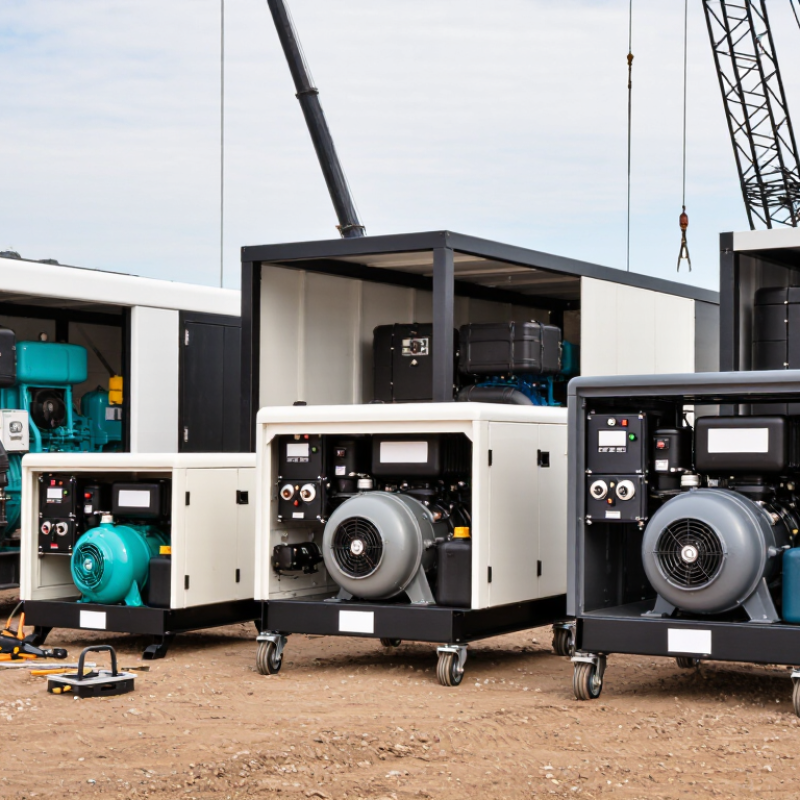
Open-frame generator sets place the engine, alternator, fuel system, radiator, and control panel on a visible steel frame. The engine burns diesel or another approved fuel, turning the alternator through a shaft. The alternator then converts mechanical rotation into electrical power. An automatic voltage regulator steadies output when appliances start or stop. A controller monitors frequency, oil pressure, coolant temperature, and overload conditions.
The open design improves access for inspection and repairs. Technicians can reach belts, filters, terminals, and fluid points without removing an enclosure. This matters on construction sites and farms, where downtime costs money. The U.S. Energy Information Administration reported that the United States generated about 4,178 billion kilowatt-hours in 2023, showing the scale of dependable electricity demand. Smaller generator sets still support critical loads when local supply fails.
Noise and weather exposure remain important weaknesses. The frame offers limited sound reduction and protection from rain, dust, or accidental contact. I once underestimated wind-driven dust during a site assessment. That was careless. Buyers should check the ISO 8528 performance rating, standby or prime-power duty, fuel consumption, and local emission requirements. The IEA’s Electricity 2024 report also notes rising demand from data centers and industrial electrification, increasing pressure on backup systems. A practical choice balances output, service access, enclosure needs, and operating conditions—not just the nameplate rating.

Open-frame generator sets mount the engine and alternator on an exposed steel frame, which improves cooling, access, portability, and serviceability. The engine turns the alternator rotor, creating electricity that is regulated and delivered through the output sockets or terminals.
How to read the chart: Continuous output is the practical rating for sustained operation. The classes shown represent common open-frame generator sizes used for home backup, construction tools, agricultural equipment, and small commercial loads. Actual performance varies with engine type, fuel, altitude, temperature, and load.
The best 2026 open-frame generator sets should be compared by specifications, not appearance. Start with rated power, load profile, and duty class. ISO 8528-1 distinguishes prime power from emergency standby power, and confusing them can create costly overloads. Check both kW and kVA, because the rated power factor affects usable capacity. A 100 kVA unit may not deliver 100 kW in every application. It depends.
Fuel efficiency deserves close inspection. Request consumption figures at 25%, 50%, 75%, and full load, rather than one attractive headline number. I would not trust a glossy fuel figure alone. Runtime also depends on tank size, altitude, ambient temperature, and maintenance. The IEA’s Electricity 2024 report estimates global data-center electricity use could exceed 1,000 TWh by 2026. That pressure makes dependable backup capacity more important, especially for sites with sensitive electronic loads.
Compare transient response, voltage regulation, frequency recovery, and alternator insulation class. These details show how the set handles pumps, compressors, and motor starting.
Control-panel compatibility with automatic transfer systems matters too. Check emissions documentation against local requirements.
Open frames improve access and cooling, but they expose operators to heat, moving parts, and higher noise. Service clearance, emergency stop placement, corrosion protection, and spare-parts access are practical buying factors. Some comparisons still overlook them. That is a mistake worth revisiting.
For 2026 buyers, the best open-frame generator set depends on load, fuel access, and operating conditions. Diesel sets remain practical for construction sites, farms, and backup systems needing long runtime. They handle heavy equipment well, but their noise and exhaust require careful placement. Gasoline models suit lighter, occasional use. They usually cost less upfront and start easily, though fuel storage needs closer attention.
Some buyers may prefer dual-fuel sets. These offer flexibility when one fuel source becomes unavailable. In field inspections, technicians often check the alternator, engine cooling system, control panel, and frame welds before discussing rated power. A sturdy frame matters on uneven ground. So does a clear load-management system. Avoid choosing only by maximum wattage. Starting currents from pumps, compressors, and motors can exceed running demand by several times.
Tips: List every appliance and motor before comparing models. Add a safety margin, but do not oversize excessively. Large engines may consume more fuel during light loads. Check decibel information, service access, grounding guidance, and local installation requirements. Ask for documented test results and maintenance intervals. No option is perfect. A set that looks efficient on paper may perform poorly in dust, heat, or frequent short cycles. Regular oil checks and clean air filters still make a measurable difference.
For buyers comparing 2026 open-frame generator sets, fuel choice often shapes the entire ownership experience. Diesel units usually suit long, heavy-duty operation, while gasoline models remain practical for lighter applications. Propane stores cleanly and resists fuel degradation, but cold conditions may reduce starting performance. I would not choose from fuel price alone. Check local availability, tank size, expected load, and service access.
Runtime figures need careful reading. A claimed 12-hour runtime may apply at 25% load, not during demanding startup cycles. Measure wattage from pumps, tools, heaters, and refrigeration. Include starting surge. Then compare fuel consumption at 50% and 75% load. Small tanks require frequent refueling. Large tanks increase weight. Real sites are rarely ideal. Published figures can disappoint.
Noise affects suitability more than many specification sheets suggest. An open-frame unit may work well on a construction site but feel intrusive near homes or events. Listen from the operator’s normal distance, not beside the exhaust. Emissions also matter. Choose efficient engines, maintain filters, and follow current operating requirements. Check overload protection, voltage stability, maintenance records, and test data. One uncomfortable truth remains: the quietest, cleanest option may not provide the longest runtime or lowest purchase cost. Trade-offs need written comparison, not guesswork.
The strongest 2026 open frame generator sets should be judged by risk, not headline output. The IEA’s Electricity 2024 report projects data-centre electricity demand could exceed 1,000 TWh in 2026. That growth raises pressure on dependable standby power. Buyers should verify ISO 8528 performance data, voltage stability, transient response, and tested load capacity. A polished brochure is not enough.
Safety begins with installation details.
Inspect emergency stops, guarded hot surfaces, lockable controls, fuel containment, grounding points, and exhaust clearance. NFPA 110 guidance emphasizes reliable emergency power systems and regular testing.
Operators should record start time, battery voltage, oil pressure, coolant temperature, and transfer performance.
Small faults become expensive quickly. A loose terminal can stop a large facility.
Maintenance should include scheduled oil and filter changes, coolant checks, battery testing, fuel sampling, and periodic load-bank testing.
Uptime Institute’s 2024 Global Data Center Survey reported that 54% of respondents experienced an outage costing more than $100,000. The figure is sobering, although outage surveys do not predict every buyer’s risk.
Total cost should include fuel consumption, installation, ventilation, service labor, spare parts, noise control, downtime exposure, and resale value. A cheaper set may consume more fuel for years.
My own caution: projected savings often rely on perfect loading, which rarely happens. A spreadsheet needs real operating hours.

| Sunday | CLOSED | |
| Monday | 9AM-12PM | 1PM-6PM |
| Tuesday | 9AM-12PM | 1PM-6PM |
| Wednesday | 9AM-12PM | 1PM-6PM |
| Thursday | CLOSED | |
| Friday | 9AM-12PM | 1PM-6PM |
| Saturday | 10AM-12PM | 1PM-6PM |
Please note that we are closed for lunch from 12PM-1PM daily.