
Choosing a supplier for a 7.5KW Belt-Driven Screw Air Compressor involves more than comparing motor ratings. Buyers should check delivered airflow, working pressure, duty cycle, noise levels, and service access. A belt drive can simplify maintenance, but belt tension and alignment still need regular attention. Small details matter.
Compressed-air specialist Ron Marshall has emphasized matching compressor output to actual demand. In paraphrase, his buying principle is: “Judge a compressor by measured system needs and operating costs, not power rating alone.” Treat that as guidance, not a verified verbatim quotation. It points to practical checks: request performance data at the intended pressure, ask what routine service includes, and confirm that replacement filters and belts are available locally.
This guide introduces seven suppliers for buyers comparing a 7.5KW Belt-Driven Screw Air Compressor. Supplier claims deserve careful review. Ask for written specifications, warranty terms, commissioning details, and a clear service contact. If possible, inspect a running unit and listen from the operator’s position; brochure figures cannot capture every site condition. Rankings can be imperfect, since regional support and application requirements vary. A supplier that suits a small workshop may not suit a continuous production line. Use the list as a starting point, then verify each option against your own air demand, installation space, and maintenance capacity.
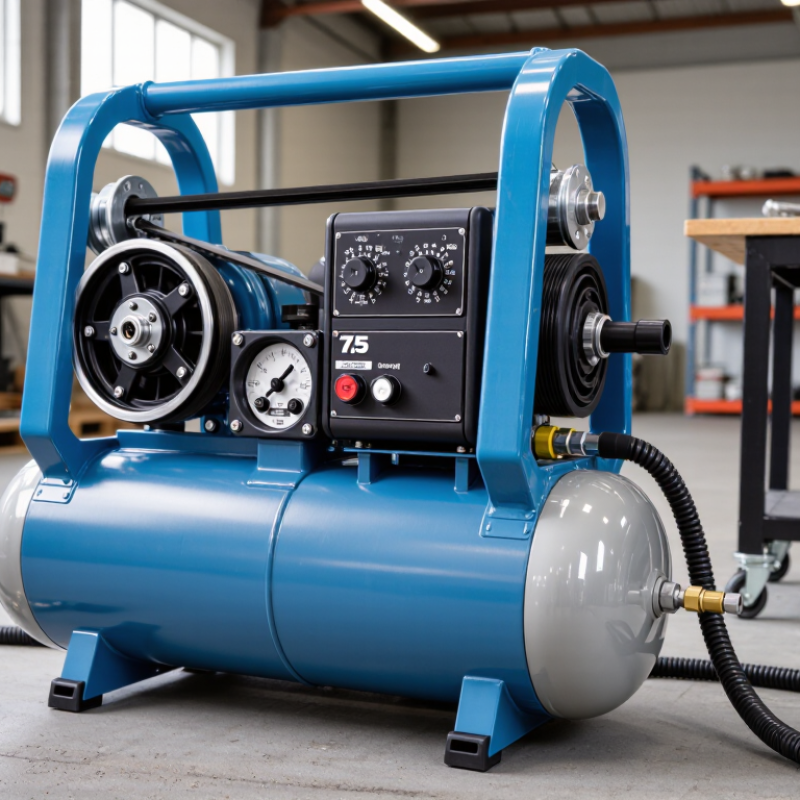
A 7.5 kW belt-driven screw air compressor pairs a 7.5-kilowatt motor with a rotary screw air end. The belt transfers power between them, and its pulley ratio helps set the air end’s speed. Screw elements compress air continuously while rotating, which suits many steady-use workshop and production applications. Output is not defined by motor power alone. Delivered airflow also depends on operating pressure, speed, and the compressor’s design.
A useful specification gives free air delivery at a stated pressure, rather than relying on a headline displacement figure. Compare figures at the same pressure; otherwise, two machines may look more alike than they are. Belt drive can allow practical adjustment or maintenance, but belts need correct tension and periodic inspection. A loose belt may slip, heat up, or wear unevenly. Small detail, real consequences.
Cooling capacity, inlet filtration, and control settings also shape dependable operation. Check the expected duty cycle and the room’s ventilation before choosing a unit. A receiver tank can smooth short demand peaks, but it does not increase the compressor’s sustained output. Ask about measured noise and service access, too. A clean specification sheet helps, though it may leave out the awkward installation details. Check the numbers twice.

A 7.5 kW belt-driven rotary screw compressor delivers roughly 10 hp, but motor size alone cannot define its useful output. Ask suppliers for free air delivery at the intended working pressure, with test conditions stated under ISO 1217. Compare figures at the same pressure, such as 7 or 8 bar. Check the belt-drive layout, service access, cooling method, control type, and whether a receiver and dryer are included. Small details matter.
The U.S. Department of Energy’s Improving Compressed Air System Performance: A Sourcebook for Industry estimates that compressed-air systems use about 10% of industrial electricity. It also notes that leaks may waste 20–30% of compressor output in some plants. That makes leak control and correct sizing practical buying criteria, not optional extras. A catalog flow figure can still mislead if the test pressure differs from the workshop’s actual demand.
These compressors commonly supply pneumatic tools, packaging lines, small CNC workshops, and general factory air networks. They suit steady demand better than systems with long idle periods, where controls and storage capacity need careful review. Ask suppliers how the unit behaves during frequent starts, what routine belt checks are required, and which filtration level fits the process. For a workshop running impact tools beside a packaging machine, pressure dips at peak use deserve attention. Real demand varies.
| Configuration | Motor Power | Typical Working Pressure | Indicative Free Air Delivery | Drive and Package | Common Applications |
|---|---|---|---|---|---|
| General-purpose fixed-speed unit | 7.5 kW (approximately 10 hp) | 7–8 bar (approximately 102–116 psi) | Approximately 0.8–1.1 m³/min (28–39 cfm) | Belt-driven; air-cooled package, usually supplied without an air receiver | Small workshops, pneumatic hand tools, maintenance areas, and intermittent production use |
| Higher-pressure configuration | 7.5 kW (approximately 10 hp) | 10 bar (approximately 145 psi) | Typically lower than the same model’s delivery at 7–8 bar; confirm the rated flow at the specified pressure | Belt-driven; pressure-rated components and settings must match the intended operating pressure | Applications requiring higher line pressure, such as selected process equipment and specialized pneumatic tools |
| Tank-mounted package | 7.5 kW (approximately 10 hp) | Commonly 7–10 bar, depending on the selected model | Model-dependent; commonly within the approximate 0.8–1.1 m³/min range at 7–8 bar | Belt-driven compressor mounted with an air receiver; receiver capacity varies by package | Garages, repair shops, and small facilities that benefit from an integrated receiver and compact installation |
| Air-dryer-ready package | 7.5 kW (approximately 10 hp) | Commonly 7–10 bar, depending on the compressor and system design | Confirm compressor flow and dryer capacity separately; dryer pressure drop may affect system performance | Belt-driven compressor configured for connection to a refrigerated air dryer and filtration | General manufacturing, workshops, and applications where reduced moisture in compressed air is needed |
| Continuous-duty industrial package | 7.5 kW (approximately 10 hp) | Typically selected from 7–10 bar models | Rated flow varies with pressure, inlet conditions, and compressor design | Belt-driven; check the manufacturer’s stated duty rating, ventilation needs, and service intervals | Steady air demand in small production lines, assembly areas, and industrial maintenance departments |
| Compact, space-conscious package | 7.5 kW (approximately 10 hp) | Commonly 7–8 bar | Approximately 0.8–1.1 m³/min at 7–8 bar as a general market reference | Belt-driven design; footprint and access clearances depend on enclosure and receiver options | Small manufacturing units and workshops with limited floor space and moderate compressed-air demand |
| System-ready package with air treatment | 7.5 kW (approximately 10 hp) | Commonly 7–10 bar, subject to the selected compressor and treatment equipment | Use the compressor’s rated free air delivery; account for pressure losses through filters and dryers | Belt-driven compressor paired with specified filtration, moisture separation, or drying equipment | Painting preparation, packaging, and general process-air duties where air quality requirements are defined |
Specifications are indicative market ranges, not guaranteed ratings for a particular product. Actual free air delivery, pressure, receiver size, duty rating, and air quality depend on the model and operating conditions; verify these values in the supplier’s technical datasheet.
When comparing suppliers, ask for delivered airflow at your required pressure, not just the 7.5 kW motor rating. Output can vary with pressure, cooling conditions, and machine design. Request a performance curve and confirm how the figures were measured. Numbers matter. Check whether the proposed unit suits your daily duty cycle, ambient temperature, and air demand peaks. A compressor that runs constantly may need a different setup than one serving a small workshop intermittently.
Inspect the practical details. Ask about belt adjustment intervals, replacement belt availability, intake filter changes, and access to routine service points. A clear maintenance schedule is more useful than a broad promise of low upkeep. Confirm the package includes suitable guards, operating instructions, and commissioning support. One point is easy to overlook: noise and heat can affect where the compressor can be installed. Ask for sound data and ventilation requirements before choosing a location. Compare warranty terms and typical response times for service calls, too.
Profiles of leading 7.5 kW compressor suppliers should compare more than catalog power. A 7.5 kW motor does not guarantee a particular airflow: delivery changes with operating pressure, cooling conditions, and machine configuration. Ask suppliers for measured flow and power data at your required pressure. ISO 1217 provides acceptance-test methods for displacement compressors, giving buyers a consistent basis for checking performance claims. Numbers need context.
Experienced suppliers also explain belt tension checks, filter changes, oil service intervals, and access to routine maintenance parts. A clear service schedule matters on a busy shop floor, where a blocked intake filter or loose belt can disrupt production. Check whether the supplier offers commissioning support and can assess piping, receiver capacity, and air treatment needs. Small details count.
The U.S. Department of Energy’s Improving Compressed Air System Performance sourcebook identifies potential energy savings of 20–50% or more through system assessment and optimization. That figure describes system-wide opportunities, not a guaranteed saving from buying one compressor. Real duty matters. Ask each supplier to document assumptions behind its efficiency estimates and to explain how the proposed unit will handle changing demand. Even careful comparisons can miss the effect of leaks or poor controls. A site survey helps.
When comparing suppliers of 7.5 kW belt-driven screw air compressors, ask for performance data at your actual working pressure. A published airflow figure without its pressure and test conditions is hard to compare. Request a technical sheet showing delivered air, motor input, noise level, and recommended operating range. A spreadsheet can still mislead. Check that each supplier is using the same measurement basis.
Look beyond the purchase price. Ask how the belt is adjusted, how much clearance routine servicing needs, and which filters and belts are standard replacements. Small details matter. If the compressor will run for long shifts, discuss duty cycle, ventilation, and the consequences of high room temperatures. Ask for a written maintenance schedule and realistic delivery times for common parts. A quick, specific answer can be more useful than a polished brochure.
Compare warranty coverage, technician availability, and the support process before choosing a partner. Ask who handles commissioning and what information they need to size the installation, such as pipe length, peak demand, and existing storage capacity. If possible, speak with a customer using a similar setup. Not every supplier will have a perfect fit for your site, and I would question any offer that avoids clear operating data. Keep the quotation, service terms, and technical specifications together for a fair comparison.

| Sunday | CLOSED | |
| Monday | 9AM-12PM | 1PM-6PM |
| Tuesday | 9AM-12PM | 1PM-6PM |
| Wednesday | 9AM-12PM | 1PM-6PM |
| Thursday | CLOSED | |
| Friday | 9AM-12PM | 1PM-6PM |
| Saturday | 10AM-12PM | 1PM-6PM |
Please note that we are closed for lunch from 12PM-1PM daily.