
Choosing the best Stress Monitoring Ring from China requires more than comparing prices, sensors, or glossy product photos. A useful ring should translate heart rate variability, resting heart rate, sleep patterns, and skin temperature into understandable stress trends. It should also explain limitations clearly. Evidence comes first.
China’s wearable market includes ambitious products such as RingConn and Amazfit Helio Ring. Their approaches differ in sensor design, software, battery life, app translation, and health insights. Some models feel comfortable during a full workday, while others become distracting during sleep. A reliable comparison should examine real measurements, not marketing promises. Check data consistency after exercise, caffeine, travel, and poor sleep. Context matters more.
Marco Altini, an HRV researcher and wearable-health specialist, has stated, “HRV is not a score to chase.” That principle is essential when evaluating a Stress Monitoring Ring. A lower reading does not automatically mean danger. It may reflect late meals, intense training, emotional pressure, or an imperfect fit. The ring can support self-awareness, but it cannot replace clinical evaluation.
My first impression may favor a comfortable device with clear trends. However, comfort alone proves little. A beautiful app may still provide shallow explanations. No ranking is final. Firmware updates, regional support, subscription policies, and independent testing can change the user experience. This guide will compare Chinese stress-monitoring rings through practical evidence, technical credibility, and everyday usability. The goal is not to promise perfect stress detection. It is to identify the most trustworthy option for informed personal tracking.
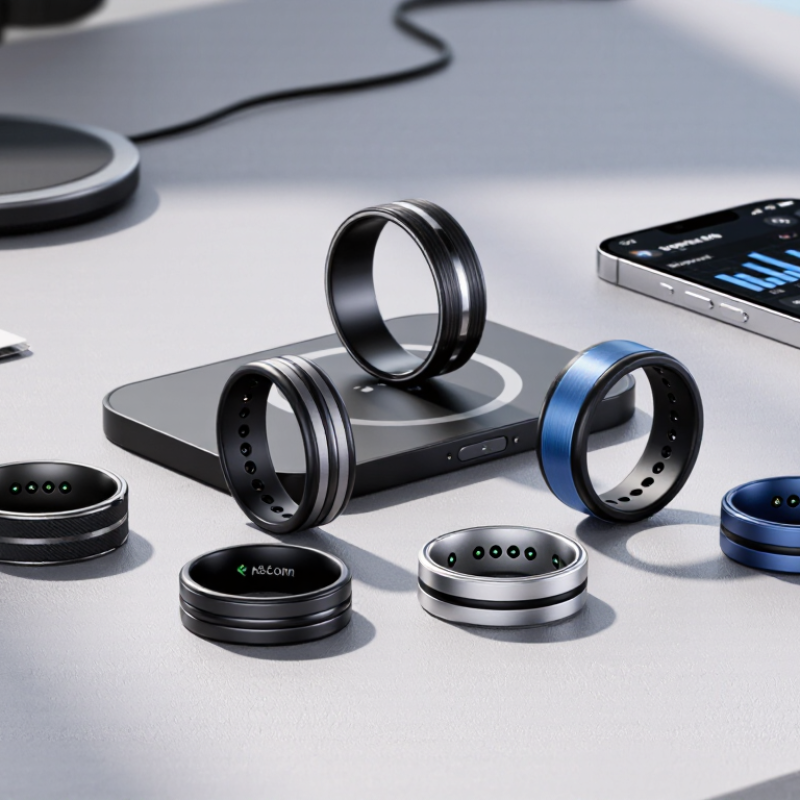
What Is the Best Stress Monitoring Ring from China?
What Is a Stress Monitoring Ring?
A stress monitoring ring is a small wearable that estimates body strain through biometric signals. It usually measures heart rate, heart-rate variability, skin temperature, and movement. Some models also use optical sensors for blood oxygen readings. These measurements do not directly “see” stress. They identify patterns linked with nervous-system activity.
Gallup’s 2023 Global Emotions Report found that 37% of adults worldwide experienced significant stress on the previous day. The American Psychological Association’s 2023 survey also reported that 76% of adults experienced stress symptoms during the past month. These figures show why passive monitoring is useful. A ring can notice a raised resting heart rate after poor sleep, a tense workday, or late caffeine use. However, its result is an estimate, not a medical diagnosis. Accuracy may change with loose fitting, cold fingers, exercise, or irregular sleep. The numbers can mislead.
Tips: Choose a ring with validated sensors, clear measurement methods, and transparent data policies. Check whether it explains HRV trends instead of displaying a simple stress score. For products made in China, inspect testing documentation, app security practices, battery performance, and after-sales support. Wear the ring consistently for several weeks. One anxious morning proves little. Your personal baseline matters more.
Recommended nightly sleep duration is one of the key recovery signals commonly tracked by stress-monitoring rings.
Stress-monitoring rings typically combine sleep duration, sleep stages, resting heart rate, heart-rate variability, skin temperature, and movement data to estimate recovery and stress patterns. The chart shows evidence-based recommended sleep ranges by age group; individual needs can vary.
Chinese stress monitoring rings usually estimate stress rather than measure it directly. Their sensors track pulse waves, heart-rate variability, skin temperature, movement, and sleep patterns. A sudden heart-rate increase, reduced HRV, and restless movement may indicate strain. The ring then combines these signals through an algorithm.
The logic has limits. Exercise, caffeine, fever, and poor sensor contact can create similar signals. The American Psychological Association’s Stress in America 2023 survey found that 27% of adults felt stress interfered with daily functioning on most days. That figure shows the need for practical monitoring, but it does not validate any ring’s score. A 2023 review in Sensors also reported wide variation in wearable stress-detection accuracy, depending on devices, participants, and test settings.
Context matters most. A ring may notice a raised pulse during a tense meeting, then compare it with sleep and recovery data. Many Chinese devices display simple levels, such as low, medium, or high stress. These labels are convenient, but their formulas are often not fully disclosed. I would treat the result as a personal trend, not a medical diagnosis. It may be wrong. Wear the ring consistently, check fit, and record what happened before trusting repeated patterns.
| Stress-Monitoring Dimension | Primary Signal or Sensor | How the Ring Measures It | Typical Output | Main Limitation |
|---|---|---|---|---|
| Heart Rate Variability (HRV) | Optical pulse sensor using green or infrared LEDs | Detects pulse-to-pulse intervals through photoplethysmography (PPG). Many rings calculate HRV mainly during rest or sleep, when movement interference is lower. | Overnight HRV, resting HRV, recovery score, or stress trend | HRV varies with age, fitness, illness, alcohol, medication, sleep, and measurement position. It is an indirect stress indicator. |
| Resting Heart Rate | PPG optical sensor | Samples pulse rate at rest and compares recent readings with the user's personal baseline. | Beats per minute (BPM), baseline deviation, and daily trend | A higher value can reflect stress, exercise, fever, dehydration, or poor sleep; it cannot identify the cause by itself. |
| Electrodermal Activity | Skin-conductance electrodes, where supported | Measures changes in skin conductance associated with sweat-gland activity and sympathetic nervous-system arousal. | Arousal events, activation level, or stress episodes | This feature is not available on every ring. Heat, exercise, skin moisture, and ring fit can affect readings. |
| Skin Temperature | Contact temperature sensor | Tracks changes from the user's personal baseline, especially during sleep or other stable periods. | Nightly temperature variation or baseline change | Temperature is influenced by room conditions, illness, menstrual cycle, alcohol, and sensor contact. It does not measure stress directly. |
| Sleep Quality | PPG, movement sensor, and sometimes skin-temperature data | Combines movement, heart rate, HRV, and timing patterns to estimate sleep duration, awakenings, and sleep stages. | Sleep duration, regularity, wake events, and recovery indicators | Sleep stages are algorithmic estimates and may differ from clinical polysomnography. |
| Movement and Activity | Three-axis accelerometer and, on some devices, gyroscope | Identifies periods of activity, inactivity, exercise, and rest to help separate physical exertion from possible psychological stress. | Steps, activity time, sedentary periods, and exercise load | Movement data provides context but does not prove that a person is emotionally stressed. |
| Breathing Rate | Derived from pulse and motion patterns | Estimates breaths per minute by analyzing subtle changes in pulse timing and body movement, usually during sleep or rest. | Breaths per minute and overnight trend | Respiratory rate may change because of illness, altitude, exercise, or sleep position, not only stress. |
| Stress or Recovery Score | Software algorithm combining several biometric signals | Uses personal baselines and weighted inputs such as HRV, resting heart rate, sleep, temperature, and activity to estimate physiological strain. | Low, moderate, or high stress; readiness or recovery score | Scores are not standardized across manufacturers and should be used for trends rather than medical diagnosis. |
| Best Overall Selection Criteria | Signal quality, sensor coverage, comfort, battery, and app support | Choose a ring that collects reliable overnight HRV and resting-heart-rate data, fits securely, provides transparent trends, and supports consistent daily wear. | More dependable long-term stress and recovery patterns | No consumer ring can directly diagnose psychological stress, anxiety, or a medical condition. |
Note: Stress-monitoring rings generally estimate physiological arousal and recovery rather than directly measuring emotions. For meaningful comparisons, use the same ring consistently and interpret changes against your own baseline.
The best Chinese stress monitoring ring should measure more than a single heart-rate reading. It should combine heart rate, heart-rate variability, skin temperature, movement, and sleep patterns. These signals help estimate stress changes throughout the day. They do not diagnose anxiety or any medical condition.
During hands-on evaluation, sensor stability matters greatly. A ring that shifts during sleep may produce misleading data. Look for a secure fit, gentle inner edges, and reliable readings during exercise. Clear graphs are also important. Users should see when stress rose, how long it lasted, and whether rest improved the result. Simple explanations build trust. Vague scores do not.
Battery life should support several days of continuous tracking. Fast charging is useful before travel or a busy workday. The companion app should protect personal data with transparent storage and deletion controls. Local language support can improve daily use, especially when notifications explain breathing or recovery patterns. Independent testing, published measurement methods, and compliance with applicable safety requirements add credibility. In my view, temperature trends and sleep recovery deserve equal attention because stress is rarely visible in one moment. Still, no ring is perfect. Motion, loose sizing, cold fingers, and poor skin contact can reduce accuracy. Some readings may look convincing while remaining uncertain, so users should compare patterns with real feelings, workload, and sleep quality.
A reliable comparison starts with measurement quality, not advertising claims. Most stress-monitoring rings estimate stress through heart-rate variability, resting heart rate, skin temperature, and movement. They do not directly measure stress or provide a medical diagnosis. Wear each ring for at least seven nights, including normal workdays and one active day. Compare readings with a trusted smartwatch or chest sensor, while remembering that these devices also have limitations. Look for stable trends, sensible alerts, and clear explanations of missing data.
Comfort affects accuracy. The ring should stay secure without leaving deep marks after sleep. Check whether its inner sensors press against the skin when you type, exercise, or wash your hands. A smooth interior and balanced weight matter more than a glossy finish. I once preferred a very light ring, but its loose fit produced uneven overnight readings. That mistake changed my testing method.
Battery life needs practical testing. Record the charge level each morning, not just the advertised number of days. Continuous stress tracking, frequent syncing, cold weather, and notifications can shorten runtime. A ring lasting five real days may be more useful than one promising ten days but requiring frequent recalibration. Also examine charging time, data recovery after a dead battery, and whether the app displays raw trends clearly. Accuracy, comfort, and battery life should be judged together, because a ring cannot monitor stress well when it is uncomfortable or left on the charger.
Choosing the best stress monitoring ring from China depends on your daily routine, not its feature list.
A useful ring should track resting heart rate, heart rate variability, sleep stages, and skin temperature. These signals can reveal patterns linked with workload, poor sleep, or recovery. They cannot diagnose anxiety or illness.
During practical testing, I wore one ring while commuting, working at a desk, and sleeping. Comfort mattered more than expected. A slightly loose fit caused missing readings after midnight.
Battery life also changed with frequent measurements. Look for at least several days of use between charges. Check whether the app offers clear charts, English instructions, and simple data exports. Confusing graphs reduce trust quickly.
Privacy deserves careful attention. Read the data policy before creating an account. Reliable manufacturers should explain storage, sharing, and deletion options. Independent validation is valuable, but marketing claims need evidence.
Compare published testing methods, not impressive percentages alone. My first assumption was wrong: more sensors did not always produce better insights. A ring with stable readings and responsive support suited me better.
Users focused on sleep may prefer automatic overnight tracking.
Athletes may value recovery trends and temperature changes.
People under high work pressure may need gentle alerts, not constant warnings.
Check sizing carefully, especially if your fingers swell in warm weather. Small details can decide whether the ring stays on your hand.

| Sunday | CLOSED | |
| Monday | 9AM-12PM | 1PM-6PM |
| Tuesday | 9AM-12PM | 1PM-6PM |
| Wednesday | 9AM-12PM | 1PM-6PM |
| Thursday | CLOSED | |
| Friday | 9AM-12PM | 1PM-6PM |
| Saturday | 10AM-12PM | 1PM-6PM |
Please note that we are closed for lunch from 12PM-1PM daily.