Why Choose Boat Ratchet Straps for Secure Transport?
A boat can shift during transport, even when the road looks smooth. That small movement may strain the hull, loosen fittings, or make a trip feel less secure. Boat Ratchet Straps help hold a vessel in position by allowing controlled tension and a firm connection to suitable trailer points. The details matter. Strap width, working load rating, hook design, and condition all affect how well a tie-down performs.
Picture a boat resting on its trailer before an early launch. The hull is supported, the bow is secured, and straps lie flat without rubbing against sharp edges. A ratchet handle clicks into place. Still, a tight strap is not automatically a safe strap. Excessive tension can place unwanted pressure on the boat, while poor placement may let it move. Checking the manufacturer’s guidance and the trailer’s tie-down points helps avoid guesswork.
This article explores why boat owners choose ratchet straps, what features deserve attention, and how careful setup supports dependable transport. It also considers practical limits, such as worn webbing, corroded hardware, and changing conditions on the road. Inspect straps before each trip, and replace any that show damage. Small checks matter. Secure transport comes from the right equipment, sensible tension, and a willingness to pause when something does not look right.
What Boat Ratchet Straps Are and How They Work
Why Choose Boat Ratchet Straps for Secure Transport?
What Boat Ratchet Straps Are and How They Work
Boat ratchet straps are strong webbing assemblies used to hold a vessel steady on a trailer. Each strap typically has a ratchet buckle, a length of woven webbing, and end fittings that connect to suitable anchor points. The buckle contains a spool and a handle. Pulling the webbing through the spool removes slack; moving the handle tightens the strap in controlled steps.
That matters.
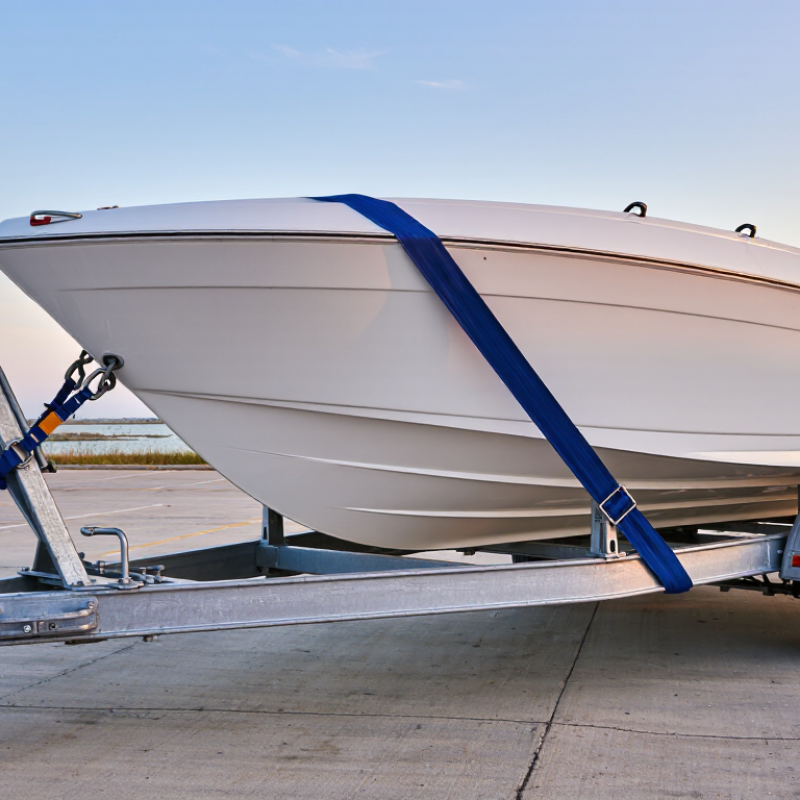
For example, a strap can run over a boat’s hull and attach to rated trailer points, helping limit movement during braking or turns. The webbing should lie flat against the boat, without twists or sharp edges underneath. Tighten until the boat is secure, but do not crush padding or press hard against delicate surfaces.
More force is not always better.
Check the strap’s working load limit and inspect the webbing, stitching, hooks, and ratchet before use. Fraying, cuts, corrosion, or a buckle that skips are reasons to replace or repair the setup. It is easy to assume a tight strap means a safe load; it does not. Anchor points, strap angle, and contact with the hull all affect stability.
Even careful checks can miss a problem, so recheck tension after a short drive.
How Ratchet Straps Secure Boats During Transport
During transport, ratchet straps help limit a boat’s forward, backward, and sideways movement. Use straps rated for the load and attach them to designated trailer and boat tie-down points. Avoid pulling across rails, windshields, or other fittings that are not designed to bear transport forces. Small details matter.
Position the straps so they hold the hull securely without pressing sharply against its edges. Soft sleeves or padding can reduce rubbing where webbing touches the boat. Tighten each strap until it is snug; excessive force may damage the hull or fittings. Follow the boat and trailer instructions, especially when deciding whether straps should cross or run straight.
Before driving, inspect the webbing for cuts, fraying, or heat damage, and check that each ratchet is fully engaged. Secure loose strap ends so they cannot flap against the hull. At a safe stop, check tension again: vibration can loosen a setup that seemed firm at the launch ramp. I still find this easy to overlook when packing quickly, so a deliberate walk-around is worth the extra minute.
Key Features for Choosing Boat Ratchet Straps
Why Choose Boat Ratchet Straps for Secure Transport?
Key Features for Choosing Boat Ratchet Straps
A secure setup begins with the working load limit (WLL), not the strap’s breaking strength. Check the label on every strap and fitting. The Web Sling & Tie Down Association’s guidance stresses rated components; an assembly is only as strong as its weakest part. A worn hook can undo a strong strap.
For a practical benchmark, FMCSA cargo-securement rules require aggregate tiedown WLL of at least half the cargo’s weight for covered commercial vehicles. A 1,200-pound boat would therefore call for at least 600 pounds of combined WLL under that rule. It does not automatically govern every private boat trailer, so follow your trailer and boat manufacturers’ instructions too. Details matter.
Choose webbing that resists abrasion and moisture, with corrosion-resistant hardware suited to a wet launch ramp. Match strap length and hook style to the trailer’s anchor points. A ratchet should tighten smoothly without crushing hull edges; add protective padding where webbing touches gelcoat. After loading, check that the boat cannot shift forward, backward, or sideways. Then recheck tension after a short drive. Easy to overlook. Salt, grit, and sharp trailer edges can shorten strap life, so inspect stitching and hardware before each trip. A strap may look fine and still be tired.
Why Choose Boat Ratchet Straps for Secure Transport?
Minimum Aggregate Working Load Limit (WLL) by Boat-and-Cargo Weight
For cargo transported on U.S. public roads, FMCSA rules generally require the aggregate WLL of tiedowns securing an article or group of articles to be at least 50% of their weight. Choose straps by their labeled WLL—not breaking strength—and follow your trailer and boat manufacturer’s instructions. Requirements may vary by jurisdiction and load.
Source: 49 CFR § 393.106(d). Values shown are calculated examples of the 50% minimum.
How to Size and Position Straps for a Boat
Why Choose Boat Ratchet Straps for Secure Transport?
How to Size and Position Straps for a Boat
Choose strap length by measuring the actual route between trailer anchors, over the boat, and back to the fastening point. Allow enough length for the ratchet to engage fully, but avoid long loose tails that can flap in the wind. Check the strap’s working load limit, not just its breaking strength, and follow the boat and trailer manufacturers’ guidance. Check the fit.
Position straps at sturdy, intended tie-down points, such as suitable transom eyes or trailer attachment points. Keep each strap clear of the windshield, rails, cables, and sharp edges. A protective sleeve can help prevent abrasion where webbing touches the hull. Small details matter. Tighten until the boat is held firmly against the supports, without crushing padding or visibly bending the hull. Over-tightening is an easy mistake, especially when the ratchet feels smooth. After a short drive, stop somewhere safe and check for looseness, shifting, or chafing; straps can settle as the boat and trailer move.
Inspection and Care for Reliable Strap Performance
Before loading, unwind each boat ratchet strap and inspect its full length in good light. Look for cuts, fraying, broken stitches, melted patches, knots, or chemical discoloration. Check the ratchet teeth, handle, and hooks for cracks, rust, or deformation. The Web Sling & Tie Down Association’s guidance identifies these kinds of damage as reasons to remove synthetic web tie-downs from service. Salt and grit can hide wear. Rinse straps with fresh water after use, then dry them fully in shade before storage. Avoid solvents and sharp bends around the boat’s hull.
Read the sewn label before securing the load. FMCSA cargo-securement rules calculate a synthetic web tie-down’s working load limit as one-third of its breaking strength; the working load limit, not breaking strength, is the usable rating. Never guess when a label is missing or unreadable. Replace the strap. During a journey, stop after the first stretch of road and check for slack, shifted padding, or a ratchet handle that has loosened. Recheck after bumps or rain. A strap can look sound and still have hidden damage. That part is easy to miss.