China’s automotive supply base has become a serious sourcing option for global buyers. In 2024, China produced approximately 31.28 million vehicles, according to the China Association of Automobile Manufacturers. It also exported nearly 5.86 million vehicles. These figures show manufacturing scale, but volume alone cannot prove supplier reliability.
The International Energy Agency’s Global EV Outlook 2025 reports that China remained the world’s largest electric car market in 2024. Its battery, powertrain, sensor, infotainment, and advanced driver-assistance ecosystems continue to expand. This growth supports a broader car systems industry, serving passenger vehicles, commercial fleets, and new-energy platforms. OICA production data adds useful context, although different organizations classify components and vehicle categories differently.
This guide examines China’s top 10 car systems manufacturers for global buyers. The evaluation considers engineering experience, production capacity, quality management, software capability, certifications, export support, and OEM relationships. Factory audits matter. So do sample validation, traceability records, and warranty procedures.
Public information is uneven.
Some companies publish detailed testing data. Others provide limited technical evidence. Therefore, buyers should treat this list as a practical starting point, not a final procurement decision. Direct verification remains essential. A supplier may offer an attractive quotation, yet struggle with regional compliance, spare-parts availability, or integration support. These weaknesses are easy to overlook during early negotiations.
The selected manufacturers represent different strengths, from electronic control units and cockpit systems to electric drive modules and thermal-management solutions. Their capabilities may suit different vehicle programs, order volumes, and market requirements. This article highlights where each supplier performs well, while recognizing that no manufacturer is ideal for every application.
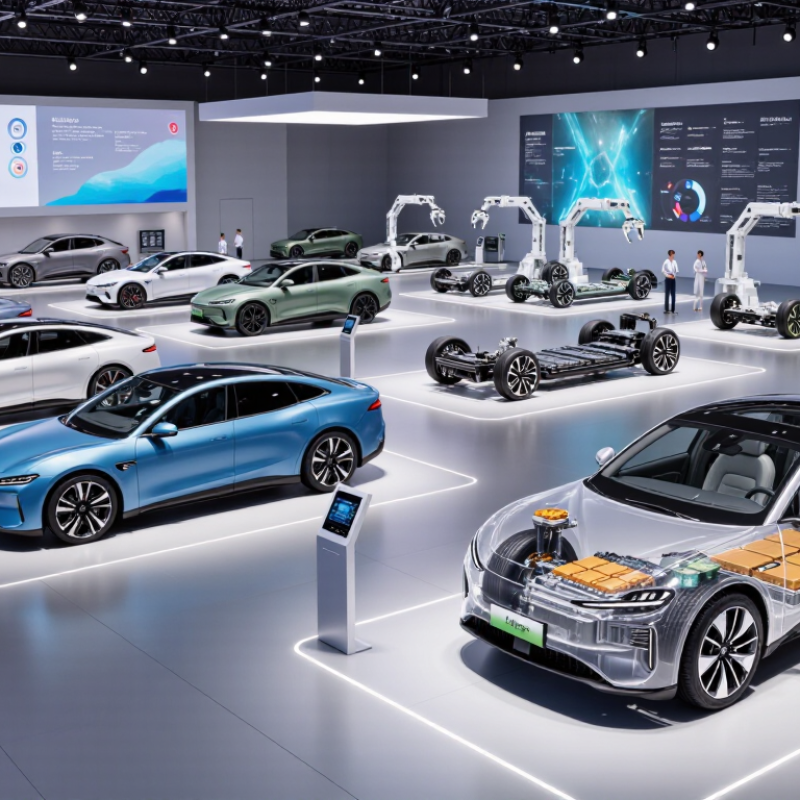
Automotive systems manufacturers in China develop complete vehicle functions, not only individual parts. Their products may include braking systems, steering modules, thermal management, wiring, sensors, seats, and electronic control units. Some suppliers also integrate software, testing equipment, and production support for overseas vehicle programs.
In practical sourcing work, buyers should examine how each system performs inside a real vehicle. A clean factory floor is useful evidence, but it proves little alone. Ask for validation reports, material traceability, process controls, and failure data. Check whether the supplier understands your target market’s safety, emissions, cybersecurity, and product compliance requirements. Certifications can support trust, yet they should not replace independent audits. A catalog can look complete. Reality may be narrower.
Tips: Request samples from regular production lines, not special demonstration units. Review change-control procedures and warranty response times. Confirm communication in technical English, including drawings, specifications, and test records. Visit production and testing areas when possible. A small pilot order can reveal packaging weaknesses, inconsistent tolerances, or unclear responsibilities before volume production begins.
Experienced buyers also compare engineering depth, capacity planning, and after-sales support. The lowest quotation may hide tooling revisions, software updates, or expensive logistics. Chinese automotive systems manufacturers can offer strong manufacturing scale and flexible development, but performance varies by supplier and system category. Careful verification remains essential.
Selecting China’s top 10 car systems manufacturers requires more than checking production volume. Our review examines factory experience, engineering depth, and export performance. We study product areas such as braking systems, thermal management, steering, electronics, and powertrain components. Each candidate must show consistent quality across real production orders, not only polished samples.
Evidence matters. We compare independent test reports, quality certificates, recall records, and customer feedback from different markets. Factory visits can reveal details that brochures omit, including calibration equipment, worker training, and parts traceability. We also review delivery accuracy, warranty handling, technical support, and communication during design changes. A supplier that answers quickly can prevent costly production delays.
The final ranking uses weighted scores for quality, innovation, capacity, compliance, reliability, and total purchasing value. No single metric decides the result. A large facility may lack flexible engineering support, while a smaller manufacturer may offer stronger customization. Public information is sometimes incomplete, so several judgments require careful verification. The list should therefore be treated as a practical buying reference, not a permanent verdict. Market conditions, factory investments, and customer performance can change each year.
| Evaluation No. | Selection Dimension | Weight | What Is Evaluated | Acceptable Evidence for Global Buyers | Scoring Rule | Reference Framework |
|---|---|---|---|---|---|---|
| 1 | Manufacturing Quality | 20% | Consistency of production processes, defect prevention, traceability, process control, and customer-specific quality planning. | Valid quality-management certificates, process-audit records, PPAP files, control plans, and documented corrective-action performance. | 0–5 points, multiplied by 20% |
IATF 16949:2016 ISO 9001:2015 |
| 2 | Functional Safety Capability | 15% | Ability to design, validate, and document safety-related automotive electrical and electronic systems across the product life cycle. | Safety plans, hazard analyses, safety cases, verification records, and development processes aligned with automotive functional-safety requirements. | 0–5 points, multiplied by 15% | ISO 26262:2018 |
| 3 | Cybersecurity and Software-Update Readiness | 15% | Governance of vehicle cybersecurity risks, vulnerability management, incident response, secure development, and software-update processes. | Cybersecurity management documentation, vulnerability-response procedures, software-update governance, and customer cybersecurity support commitments. | 0–5 points, multiplied by 15% |
UNECE R155 UNECE R156 |
| 4 | Product and System Coverage | 10% | Capability to supply complete automotive systems such as powertrain, thermal management, chassis, body electronics, cockpit, ADAS, and EV charging-related components. | Verified product catalogues, engineering specifications, application lists, system-level drawings, and documented integration experience. | 0–5 points, multiplied by 10% | Product documentation and technical validation records |
| 5 | International Compliance and Homologation Support | 10% | Readiness to support regulatory approval, market-entry testing, labeling, technical files, and customer-specific homologation requirements. | Type-approval documentation, laboratory test reports, regulatory declarations, electromagnetic-compatibility records, and market-specific compliance matrices. | 0–5 points, multiplied by 10% |
UNECE WP.29 EU Regulation 2018/858 |
| 6 | EV and High-Voltage Engineering | 10% | Technical competence in battery-related systems, high-voltage safety, charging interfaces, power electronics, thermal management, and electric-drive integration. | High-voltage test procedures, insulation and safety data, charging compatibility records, thermal validation, and relevant product-level test reports. | 0–5 points, multiplied by 10% |
ISO 6469 series IEC 61851 series |
| 7 | Production Capacity and Supply Resilience | 8% | Ability to maintain stable supply during demand changes, component shortages, logistics disruptions, and engineering changes. | Capacity plans, production lead times, business-continuity plans, supplier-risk controls, alternate-source procedures, and delivery-performance records. | 0–5 points, multiplied by 8% | ISO 22301:2019 |
| 8 | R&D, Testing, and Validation | 5% | Strength of engineering resources, prototype development, durability testing, environmental testing, software validation, and design-change control. | Testing capability lists, laboratory accreditation where applicable, validation plans, reliability reports, engineering-change records, and technical staffing information. | 0–5 points, multiplied by 5% | ISO/IEC 17025:2017 |
| 9 | Export, Logistics, and Commercial Readiness | 4% | Ability to handle international contracts, packaging, shipping documentation, customs requirements, delivery terms, and export customer support. | Standardized quotation formats, export packaging specifications, shipping records, customs documentation, Incoterms-based contracts, and multilingual support procedures. | 0–5 points, multiplied by 4% | ICC Incoterms® 2020 |
| 10 | After-Sales, Warranty, and Technical Support | 3% | Effectiveness of warranty handling, spare-parts availability, field-failure analysis, technical documentation, and service response. | Warranty policies, service-level commitments, spare-parts plans, failure-analysis procedures, repair manuals, diagnostic support, and escalation contacts. | 0–5 points, multiplied by 3% | Contractual service terms and verified customer-support procedures |
| Total Weighted Evaluation | 100% | Final score = Σ (dimension score ÷ 5 × dimension weight). Only manufacturers meeting minimum quality, compliance, traceability, and export-documentation requirements should be considered for the final Top 10 list. | ||||
Method note: The framework uses documented evidence rather than company-name visibility, brand recognition, or unsupported sales claims. Evidence should be verified for the relevant factory, product family, target market, and production period before a final ranking is published.
China’s leading car systems manufacturers cover far more than engines and replacement parts. Their product portfolios often include electric motors, battery packs, inverters, transmission systems, and power management units. Some suppliers also produce fuel-system components for conventional vehicles. This broad coverage helps global buyers compare complete system solutions instead of isolated parts.
Chassis products form another major category. Manufacturers commonly supply braking systems, steering assemblies, suspension modules, wheel-speed sensors, and electronic stability components. Interior and body electronics may include instrument clusters, lighting controllers, power-window modules, seats, and central vehicle controllers. Infotainment units, telematics terminals, navigation hardware, and connectivity gateways are also widely available. In supplier audits, I would check connector quality, thermal testing records, software update procedures, and traceability documents.
Safety and intelligent driving products deserve careful attention. Available categories include cameras, radar modules, parking systems, driver-monitoring equipment, and advanced assistance controllers. Thermal-management suppliers may provide compressors, cooling plates, pumps, valves, and battery climate-control assemblies. Charging equipment can include onboard chargers, charging guns, and high-voltage distribution units.
The boundaries are not perfectly clear. One manufacturer may sell a complete module, while another offers only its core electronic board. That difference affects integration time, testing costs, and warranty responsibility. Global buyers should request sample data, production capacity evidence, compliance documentation, and real failure-analysis reports before choosing a category partner. A polished catalog is useful, but it is not proof of field reliability.
The top ten car systems manufacturers serve global automotive buyers through localized engineering, disciplined testing, and clear communication. Their teams study regional driving habits, road conditions, climate, and vehicle regulations before proposing a system. A cooling module for desert fleets may need different materials than one used in northern winters. Small details matter.
Experienced suppliers usually provide prototype samples, interface drawings, test reports, and production timelines. Buyers can inspect vibration testing, thermal cycling, water resistance, and electromagnetic compatibility records. Some manufacturers also offer remote diagnostics and software updates, helping vehicle makers manage faults after delivery. English documentation is common, but accurate translations remain essential for local technicians. One unclear wiring label can delay an entire assembly line.
The process is not flawless. A supplier may promise fast customization but underestimate tooling changes or approval time. Careful buyers should request milestone reviews, sample approval records, and measurable quality targets. Factory audits can reveal practical facts, such as calibration habits, spare-part storage, and response speed after a failed test. Reliable manufacturers explain limitations instead of hiding them. That honesty builds stronger cooperation across borders. Yet cost pressure can still weaken materials or support, so purchasing teams must compare total ownership costs, not only the quotation. Experiences from real installations often expose gaps that polished presentations miss.
Choosing among China’s leading car systems manufacturers requires more than comparing prices. Buyers should examine engineering capability, production consistency, and support after delivery. Ask for test records, process documents, and clear responsibility for design changes. A reliable supplier should explain how each system performs during heat, vibration, moisture, and electromagnetic testing. Factory visits also matter. Inspect calibration tools, inspection stations, and sample traceability. A clean showroom is useful, but it does not prove stable production.
Tips: Request a sample unit and review its communication logs, wiring layout, and fault-handling process. Check whether software updates are documented and safely controlled. Confirm certifications for your target markets, including applicable automotive quality and cybersecurity requirements. Review capacity data, key component sources, lead times, warranty terms, and technical response hours. Ask for references from similar vehicle programs, when legally and commercially available.
Cost deserves careful attention, but the lowest quotation can become expensive later. Compare total ownership costs, including tooling, validation, integration, maintenance, and replacement parts. Contract terms should define acceptance standards and change-control procedures. Buyers should also test communication during a small pilot project. Delayed answers may signal future difficulties. Some supplier documents look complete, yet testing details remain vague. That is a warning worth discussing. No evaluation method is perfect; even experienced teams can overlook regional service limits or software dependencies. Use independent technical reviews when the system affects safety, connectivity, or vehicle control.

| Sunday | CLOSED | |
| Monday | 9AM-12PM | 1PM-6PM |
| Tuesday | 9AM-12PM | 1PM-6PM |
| Wednesday | 9AM-12PM | 1PM-6PM |
| Thursday | CLOSED | |
| Friday | 9AM-12PM | 1PM-6PM |
| Saturday | 10AM-12PM | 1PM-6PM |
Please note that we are closed for lunch from 12PM-1PM daily.