
China Top 10 Audio Installation Companies for Global Buyers
China’s audio installation industry has moved far beyond basic speaker supply. Today, leading companies design complete sound environments for hotels, conference centers, retail spaces, theaters, houses of worship, and smart homes. Their work may include acoustic planning, equipment integration, wiring, commissioning, and long-term technical support.
This guide introduces ten Chinese audio installation companies that attract attention from global buyers. The selection considers project experience, engineering capability, product compatibility, quality control, international communication, and after-sales service. Certifications and export records also matter. A polished showroom is not enough.
Floyd Toole, a leading researcher in loudspeaker performance and room acoustics, wrote, “The room is part of the loudspeaker.” His observation remains practical. A powerful amplifier cannot correct poor room design, reflective glass, uneven speaker placement, or careless calibration. Strong installers measure the space, study its purpose, and adjust the system accordingly.
The companies discussed here serve different markets. Some focus on commercial projects and large venues. Others provide residential systems, conference solutions, or integrated control platforms. Buyers should compare them against real project needs, not only online rankings.
There is no perfect top ten. Company capabilities can change, and public information is sometimes incomplete. Even experienced buyers may overlook service response time or local installation partners. That weakness deserves attention.
The most reliable decision combines factory verification, technical drawings, sample testing, and clear contract terms. For international projects, communication can be as important as hardware. This overview offers a practical starting point for evaluating China’s audio installation specialists with greater confidence.
What Audio Installation Companies Do and Why Global Buyers Need Them
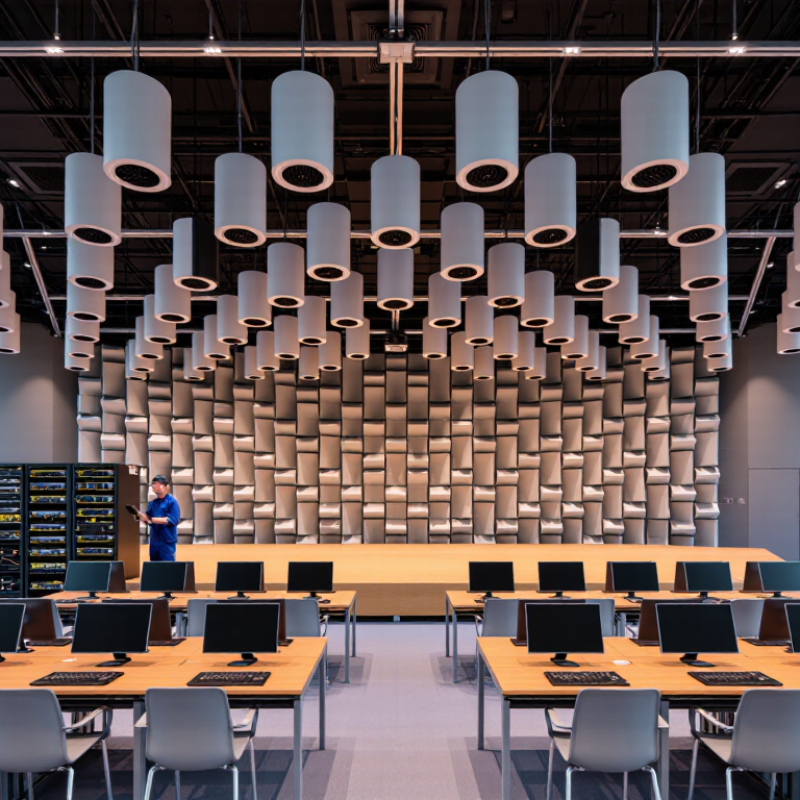
Audio installation companies turn a room, venue, or workplace into a usable communication environment. Their work starts before any equipment arrives. Technicians inspect room dimensions, wall materials, ceiling height, power access, and expected audience size. They then design speaker placement, microphone coverage, signal paths, control systems, and acoustic treatment.
For global buyers, this expertise reduces costly uncertainty. An experienced company can interpret local building requirements and coordinate shipping, documentation, installation schedules, and technical support. It can also adjust designs for humid climates, large temperature changes, or limited maintenance staff. During commissioning, engineers test speech clarity, background noise, delay, and volume consistency from different seats. Small details matter. A cable route behind a panel can affect future repairs.
The strongest providers offer training, system drawings, testing records, and practical maintenance plans. They should explain limitations instead of promising perfect performance. Even experienced teams can miss reflections from glass walls or changes in furniture layout. A reliable partner returns to the measurements and corrects the design when needed. Global buyers should compare installation methods, response times, warranty terms, and communication quality, not only the equipment list. The cheapest proposal may hide complex labor, weak documentation, or expensive future adjustments. Clear reporting builds trust across borders. Good installation is not merely mounting hardware; it is making every spoken word and audio signal dependable in daily use.
China Top 10 Audio Installation Companies for Global Buyers - What Audio Installation Companies Do and Why Global Buyers Need Them
| Rank | Anonymous Provider Profile | Primary Project Types | Typical Installation Scope | Core Buyer Deliverables | Relevant Technical References | International Buyer Support | Why Global Buyers Consider This Profile |
|---|---|---|---|---|---|---|---|
| 01 |
Profile A Large-venue integrator System integration |
Stadiums, arenas, convention centers, large worship venues | Distributed sound, line-array systems, digital signal processing, delay zoning, paging, acoustic measurement and commissioning | System drawings, cable schedules, equipment rack plans, DSP files, commissioning reports and operator training | IEC 60268 series; ISO 3382 measurement principles; applicable local electrical and fire regulations | English documentation, remote design reviews, export packing and coordinated site commissioning | Suitable for projects requiring high output, uniform coverage and centralized control across large areas |
| 02 |
Profile B Corporate AV specialist Meeting technology |
Corporate offices, boardrooms, training centers and multi-purpose rooms | Speech reinforcement, conferencing audio, acoustic echo cancellation, wireless microphones and room control integration | Room standards, user workflows, control logic, test scripts, handover manuals and support procedures | AVIXA performance practices; IEC 62368-1 equipment safety reference; network design requirements | Remote user acceptance testing, multilingual operating guides and scheduled maintenance options | Valuable where intelligible speech, reliable conferencing and simple daily operation are priorities |
| 03 |
Profile C Hospitality audio contractor Commercial background music |
Hotels, restaurants, retail stores, lounges and mixed-use developments | Background music, paging zones, volume control, outdoor audio, centralized source distribution and equipment concealment | Zone schedules, speaker layouts, source-routing diagrams, commissioning checklists and maintenance recommendations | IEC 60268 principles; local low-voltage installation rules; project-specific fire and life-safety requirements | Phased installation planning, after-hours work coordination and remote troubleshooting | Helps global operators maintain consistent sound levels and user experience across multiple zones |
| 04 |
Profile D Life-safety audio integrator Voice evacuation |
Transport hubs, public buildings, campuses and industrial facilities | Emergency voice alarm, evacuation messaging, monitored amplifiers, redundant cabling and zoned paging | Cause-and-effect matrix, battery calculations, audibility test records, fault-monitoring schedules and authority-submission documents | EN 54-16 and EN 54-24 where applicable; ISO 7240 references; local fire-code approval requirements | Compliance coordination, inspection support and documented testing by qualified local parties | Important for buyers whose projects require auditable emergency communication and regulatory approval |
| 05 |
Profile E Education and campus specialist Campus deployment |
Universities, schools, lecture theaters, libraries and distance-learning rooms | Lecture capture audio, classroom reinforcement, assistive listening, paging and campus-wide audio distribution | Room templates, accessibility provisions, signal-flow diagrams, training packages and asset registers | ISO 21542 accessibility principles; AVIXA measurement practices; local building and electrical codes | Standardized room designs, batch deployment planning and centralized service documentation | Well suited to buyers managing many rooms that need consistent performance and simplified support |
| 06 |
Profile F Performance venue specialist Theater and live events |
Theaters, concert halls, cultural centers and performing-arts venues | Front-of-house systems, monitor systems, stage boxes, digital consoles, intercom and show-control interfaces | Input lists, patch sheets, system tuning files, backstage signal plans and technical operator training | IEC 60268 references; electrical safety standards; venue-specific rigging and occupational-safety requirements | Technical consultation, touring-system coordination and scheduled tuning support | Useful for venues where coverage consistency, low latency and flexible event operation are essential |
| 07 |
Profile G Industrial communication specialist Industrial paging |
Factories, warehouses, logistics centers, utilities and outdoor work areas | Industrial paging, high-noise-area speech reinforcement, horns, visual alerts and zone-based announcements | Noise survey, intelligibility targets, coverage maps, weather-protection schedule and maintenance plan | IEC 60268 principles; IP-rating requirements under IEC 60529; site-specific hazardous-area rules where applicable | Pre-installation surveys, environmental protection reviews and spare-parts planning | Appropriate where speech must remain intelligible in noisy, large or partially outdoor environments |
| 08 |
Profile H Networked AV specialist Audio over IP |
Smart buildings, headquarters, broadcast facilities and distributed enterprise sites | Audio over IP, networked DSP, centralized monitoring, clocking, VLAN planning and integration with control systems | IP addressing plan, multicast requirements, QoS settings, cybersecurity checklist and remote-monitoring procedures | Dante-domain design practices; AES67 interoperability principles; IEEE Ethernet and network-service requirements | Remote commissioning, network documentation and coordination with the buyer's IT department | Reduces cabling complexity and supports scalable audio management across geographically distributed rooms |
| 09 |
Profile I Architectural audio specialist Design integration |
Luxury retail, museums, galleries, premium residences and architecturally sensitive spaces | Flush-mounted loudspeakers, concealed equipment, acoustic coordination, discreet cabling and synchronized ambient audio | Shop drawings, reflected-ceiling coordination, finish samples, acoustic targets and visual-impact approvals | IEC 60268 references; project acoustic criteria; local construction, fire and accessibility requirements | Design-team coordination, sample-room approvals and detailed finish documentation | Best for projects balancing audio performance with strict architectural and interior-design requirements |
| 10 |
Profile J After-sales and retrofit specialist Upgrade projects |
Existing venues, hotels, offices, schools and public facilities requiring modernization | System assessment, equipment replacement, cabling reuse, DSP retuning, phased upgrades and maintenance contracts | Condition survey, retrofit design, compatibility matrix, migration plan, test results and updated as-built documents | IEC 60268 references; existing-building electrical requirements; applicable fire and accessibility codes | Spare-parts management, remote diagnostics, planned maintenance and minimal-downtime scheduling | Helps global buyers improve existing systems without replacing every component or interrupting operations |
Related Posts
-
10 Audio Installation Tips Every Buyer Should Know
-
Top 10 Tips for Mobile Audio Installation Success
-

Top 10 Mobile Audio Installation Companies Worldwide
-

Driving Innovation in Car Stereo Installation Trends at the 138th Canton Fair 2025
-

Top Car Installation Trends to Watch in 2026?
-

Top 10 Car Music Systems You Need to Consider in 2026?