How to Choose the Best Rechargeable Headlamp?
Choosing the best rechargeable headlamp is less about finding the brightest number on a box and more about matching the light to real tasks. A trail runner may need a stable fit and a focused beam. A camper might value softer flood lighting for cooking or sorting gear. For repairs, a wide beam can make small parts easier to see. The right choice depends on where, how often, and for how long you use it.
Compare brightness, beam pattern, weight, controls, and battery runtime together. Maximum lumens can sound impressive, but that setting may drain the battery quickly. Check the stated runtime at more than one brightness level, and look for clear details about charging and battery replacement. A Headlamp Rechargeable model with a USB-C port may be convenient, but charging access is not the whole story. Cold conditions can reduce battery performance, while a loose strap can become irritating after an hour. Small details matter.
Water resistance ratings and lockout controls also deserve attention, especially if the lamp will ride in a pack. Manufacturer specifications are useful, though real runtime can vary with temperature, battery age, and settings. No single model is best for everyone. A little uncertainty remains until the light is tested in your own conditions, so choose a return policy you understand and avoid relying on one lamp as your only safety plan.
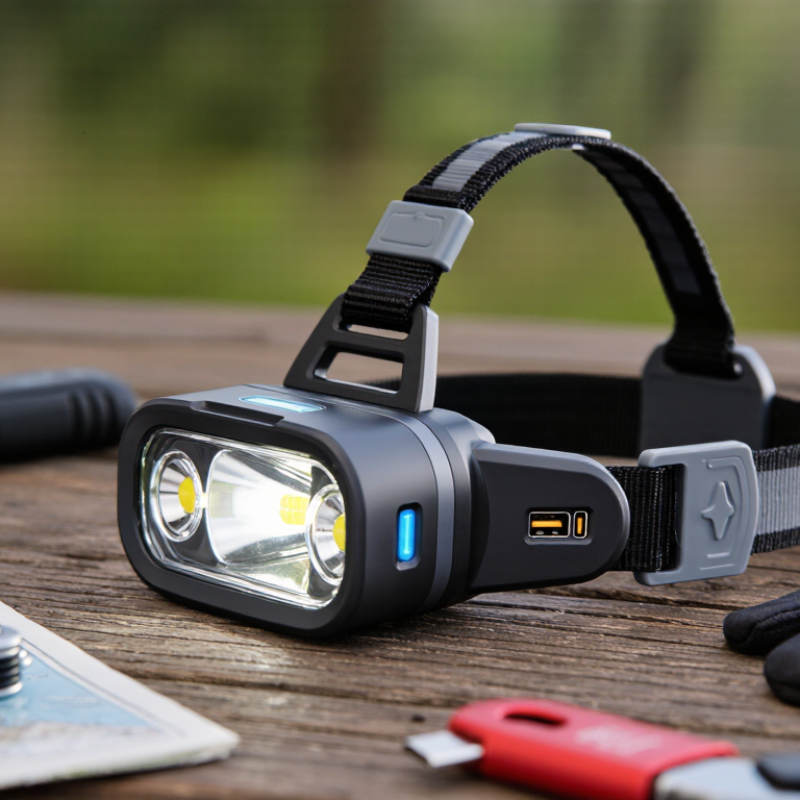
Determine Your Intended Uses and Operating Conditions
A rechargeable headlamp should fit the work you actually do, not an imagined worst-case adventure. For evening walks, a wide, even beam can make sidewalks and nearby hazards easier to see. Trail users may prefer a beam that reaches farther, especially on uneven ground. For repairs, check whether the lamp tilts low enough to light a workbench without shining into your eyes. Small details matter.
Think about how long you will use it and where you can recharge it. A short commute may need only modest runtime, while an overnight hike calls for a larger battery or a reliable backup plan. Check runtime at the brightness level you expect to use; maximum-output figures may not describe a full evening outdoors. Cold weather can reduce battery performance, and wet conditions call for a suitable water-resistance rating. That matters.
Try the controls with gloves if you work outside in winter. See whether the charging port is easy to reach, and whether the lamp stays comfortable after an hour. Weight can feel minor in a store, then annoying on a long walk. I still find brightness easy to overvalue. A lower setting that lasts longer may serve you better than a brief, dazzling beam. Test the fit and beam at home before relying on it in the dark.
Compare Brightness, Beam Distance, and Light Modes
How to Choose the Best Rechargeable Headlamp?
Brightness, beam distance, and light modes tell you more than a headline lumen number. Lumens describe total light output, but they do not show how evenly it reaches a trail or work surface. A wide beam can help you sort gear in a tent. A focused beam can reveal trail markers farther ahead. Compare brightness at the setting you will actually use, and check whether the maker lists runtime for that setting. Rechargeable batteries may deliver less light as they drain, especially in cold weather. Specs help, but they are not the whole story.
Beam distance is useful for spotting obstacles ahead, yet maximum distance often applies to the brightest setting. That setting may drain the battery quickly. Look for a headlamp with both spot and flood options, plus a lower mode for close tasks. A red mode can reduce glare when checking a map at night, though it is not ideal for every job. The best choice depends on your routine. Honestly, I’d give comfort and button access a little more attention than I first thought; awkward controls matter with gloves on.
Tips: Compare runtime and beam distance at matching brightness levels. Try the buttons with gloves before buying, and check whether the battery is replaceable or charges through a common cable. Keep a lower mode handy for longer outings.
Evaluate Battery Life, Rechargeability, and Charging Options
A rechargeable headlamp’s runtime depends on more than its battery capacity. Compare the stated hours at the brightness level you will actually use; maximum-output figures can look impressive but may last only briefly. Check whether the lamp maintains steady brightness or gradually dims as the battery drains. Small details matter. A dimming indicator, for example, can help you avoid discovering an empty battery halfway through a trail or repair.
Charging options affect everyday convenience. USB-C is widely available, while a proprietary cable can be awkward if it gets misplaced. Some models let you remove the battery, which is useful for carrying a spare or replacing an aging cell. Not always. A built-in battery may be simpler and lighter, but it can leave you waiting near an outlet. Look for a clear charge indicator and check whether the lamp can operate while charging. That feature is helpful at a campsite, though it does not replace planning ahead. Charging time, battery performance in cold weather, and the availability of a compatible power source deserve attention too. I would not choose by capacity alone; the most useful option is the one whose runtime and charging routine match your actual outings.
How to Choose the Best Rechargeable Headlamp?
Compare the approximate nominal energy in common rechargeable headlamp battery formats. More watt-hours can provide more energy, but actual runtime depends on the headlamp’s power settings, efficiency, and conditions.
Charging options: Built-in USB charging is convenient when you can recharge the headlamp directly. Headlamps with removable cells offer the flexibility to carry spares or charge batteries separately. Check the manual for supported cells and charging methods; never charge a cell in a way its manufacturer does not permit.
Approximate comparison based on typical nominal cell specifications: AAA NiMH, 1.2 V × 900 mAh ≈ 1.1 Wh; AA NiMH, 1.2 V × 2,250 mAh ≈ 2.7 Wh; 18650 Li-ion, 3.6 V × 3,000 mAh ≈ 10.8 Wh. Individual capacities vary, and these figures are not runtime measurements.
Assess Fit, Comfort, Durability, and Weather Resistance
A headlamp should sit level without pressing your forehead or bouncing when you jog. Adjust the strap with cold-weather gloves on; stiff buckles can become frustrating outdoors. Choose a broad, soft band, and check that the lamp stays aimed when you look down at a map. Comfort is personal, and a specification sheet cannot settle it. Try the fit for several minutes, not just in a shop mirror.
Durability depends on more than a tough-looking shell. Check hinge movement, battery-door seals, and whether the controls work with wet fingers. For weather resistance, read the exact IP rating: IEC 60529 defines IPX4 as protection against splashing water, while IPX7 covers temporary immersion up to one meter for 30 minutes under test conditions. Neither rating guarantees performance after impacts or worn seals. Runtime figures also need context: ANSI/PLATO FL 1 measures runtime until output falls to 10% of its initial level. Useful data, but not a promise of steady brightness.
Tips: Test the lamp in rain-like spray, then inspect the battery compartment for moisture. Compare its measured weight with batteries installed. Keep the receipt; even a careful fit test may miss a pressure point that appears after an hour.
Compare Models Against Your Priorities and Budget
A rechargeable headlamp should fit the work you actually do, not just look powerful on a specification sheet. For evening walks, a light, comfortable model with a stable beam may matter more than maximum brightness. If you repair equipment or camp after dark, compare beam distance, adjustable brightness, and battery life at medium settings. Maximum-output runtime is often much shorter than everyday runtime. Check the fine print.
Budget changes the trade-offs. Lower-cost models may provide enough light for short outings, but compare charging time, battery capacity, water resistance, and replacement options before buying. A higher price is not automatic proof of better value. Consider what is included, too: a useful head strap, clear battery indicator, and simple controls can save frustration on a cold night. Small details count.
Compare two or three models using the same priorities. Write down your expected use time, preferred weight, and spending limit, then check whether each model meets them. If possible, try the fit; pressure on your forehead may become noticeable after an hour. I have sometimes overvalued brightness and overlooked comfort. That was a poor trade. Specifications also cannot fully predict how a beam feels on a wet trail, so leave room for personal preference.