
Choosing a reliable Moto Electric Bike supplier requires more than comparing catalog prices. Global buyers must examine engineering quality, production consistency, battery safety, and export experience. A polished website can hide weak after-sales support. Factory evidence matters more.
This guide introduces leading Chinese suppliers serving international markets. It considers their manufacturing capabilities, motor options, frame materials, battery systems, and customization services. Practical details deserve attention, including welding marks, connector protection, brake response, charger specifications, and packaging strength. A dependable supplier should provide clear technical documents, product samples, inspection records, and responsive communication. Compliance with destination-market requirements is equally important. Buyers should verify applicable certifications, labeling rules, warranty terms, and shipping responsibilities before placing an order.
Real-world testing remains essential. A bike that performs well on a factory floor may respond differently on steep roads, wet streets, or rough warehouse routes. Battery range also changes with rider weight, temperature, terrain, and riding speed. This guide does not treat every supplier as equally suitable. Some companies may offer excellent products but limited customization. Others may communicate well but lack long-term service capacity. These differences can be easy to overlook.
Small details reveal professionalism.
We also recognize that supplier information can change. Product lines, certifications, prices, and factory capabilities require current verification. Therefore, the following overview should support, not replace, direct audits and independent inspections. With careful comparison, global buyers can identify a Moto Electric Bike partner that balances performance, reliability, compliance, and commercial value.
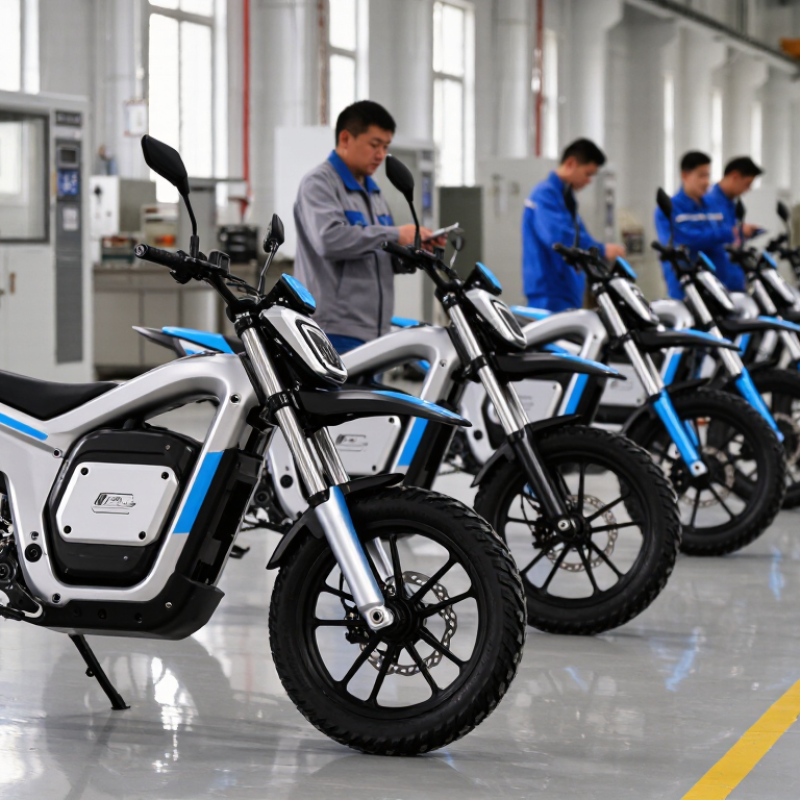
A top supplier understands real riding conditions, not only factory specifications. Its team can explain motor output, battery capacity, charging cycles, and frame strength clearly. During sample evaluations, inspect welds, cable routing, brake response, and tire clearance. Small details matter.
Reliable suppliers provide traceable battery cells, production records, and documented quality checks. They should support recognized safety requirements for batteries, chargers, and electrical systems in the target market. Ask for test reports, serial-number tracking, and inspection samples before placing a large order. Do not trust vague promises.
Technical support also defines a serious supplier. Engineers should adjust suspension, controller settings, lighting, and cargo capacity for different roads. Communication must remain clear after shipment, when problems become expensive. A useful warranty needs written coverage, response times, and replacement procedures.
No supplier fits every buyer perfectly. Some factories offer strong assembly quality but limited customization. Others respond quickly but need better documentation. I have found that honest suppliers admit these gaps and explain corrective actions. That honesty builds more confidence than polished sales language. A dependable partner keeps improving its process, even when its first sample needs revision.

China’s electric bike supply chain is concentrated in several practical manufacturing regions. Guangdong, especially around Shenzhen and Dongguan, is strong in batteries, controllers, displays, and compact electric systems. Zhejiang and Jiangsu support complete vehicle production, frame fabrication, and export-oriented assembly. Shandong is known for utility models, cargo designs, and cost-efficient factory operations. Regional strengths can overlap, so location alone never proves quality.
Supplier types vary widely. Integrated manufacturers usually manage frames, motors, battery packs, painting, assembly, and testing under one roof. They suit buyers seeking consistent specifications and simpler communication. Component specialists may offer better motors or battery systems, but coordination becomes harder. Trading companies can provide product variety, yet buyers should verify their factory access and technical responsibility. Ask for inspection records, battery test reports, sample measurements, and clear warranty procedures. A polished sample can still hide weak production control.
Tips: Compare at least three suppliers from different regions. Check welds, cable routing, brake response, and charger labeling. Request a pilot order before larger purchasing. Confirm whether replacement parts remain available for several years. Factory videos help, but live inspections are more reliable. I would also question unusually low prices; saving money early may create service problems later. Some suppliers communicate confidently but document little. That is a warning worth taking seriously.
China Top Moto Electric Bike Suppliers for Global Buyers
A supplier’s showroom proves little. IEA’s Global EV Outlook 2024 reported more than ten million electric two- and three-wheelers were sold worldwide in 2023. That scale makes disciplined quality control essential. Request test records for battery capacity, motor output, braking distance, waterproofing, and charging protection. Inspect welded joints, cable routing, tire markings, and battery seals on a production sample. Small details often reveal factory habits.
Certifications must match the exact model, battery, and production site. For international shipments, check UN 38.3 transport testing and relevant IEC battery safety reports. Motorcycle suppliers should also explain compliance with UNECE R136 or applicable regional type-approval rules. A certificate with the wrong model is almost useless. Verify the issuing laboratory, certificate number, validity, and factory address independently. This step is frequently overlooked.
Factory capacity needs physical evidence, not optimistic spreadsheets. Ask for monthly output, current utilization, peak-season lead times, and records from end-of-line testing. A capable plant should show barcode traceability, calibrated instruments, quarantine areas, and documented corrective actions. Compare claimed capacity with material deliveries and worker numbers. I have seen impressive lines running below their advertised volume. That is not automatically a failure, but it deserves questions. An on-site audit, followed by a small pilot order, exposes more than a sales presentation.
Illustrative buyer-assessment model for comparing product quality, certifications, and factory capacity.
The chart uses a 100-point procurement framework: product quality carries the highest weight, followed by certification readiness and factory capacity. Buyers should verify test reports, battery and motor traceability, applicable market compliance such as CE or UN 38.3, production records, quality-control procedures, and scalable delivery capability before placing an order.
For global buyers, choosing a Chinese electric motorcycle supplier requires more than comparing factory photos. Experienced importers request clear specifications, including motor rating, battery chemistry, range test conditions, frame materials, and charger standards. Customization may include colors, decals, seat height, dashboard language, and packaging. Major structural changes need engineering review. A small sample often reveals issues hidden in catalog images. I once learned that a beautiful prototype can still have awkward controls. That detail matters.
Pricing depends on battery capacity, order volume, tooling, inspection, and shipping terms. Ask for a tiered quotation, not one attractive unit price. Minimum orders may range from a few units for samples to several dozen for customized production. Confirm whether spare parts and warranty support are included. Export-ready suppliers should provide commercial invoices, packing lists, certificates, serial-number records, and applicable conformity documents. Battery transport requires careful classification and approved packaging. Confirm destination rules with a qualified customs broker. Delivery estimates can change during peak seasons. Treat them as planning figures, not promises.
Tips: Put every agreed detail in a purchase specification. Request a pre-shipment inspection with photos and test results. Check payment milestones, lead time, replacement procedures, and after-sales response times. Keep one sample for future comparison. Do not accept vague terms. A low quote may become expensive after rework, port fees, or missing documents.
| Supplier Category | Common Manufacturing Area | Typical Product Range | Typical Motor Output | Battery Options | Indicative OEM Unit Price1 | Typical MOQ | Customization Capability | Sample & Production Lead Time | Common Export Services | Best Fit for Global Buyers |
|---|---|---|---|---|---|---|---|---|---|---|
| Urban electric mopeds | Jiangsu and Zhejiang | Step-through city mopeds and low-speed commuter models | 1,000–2,000 W nominal | 48 V or 60 V; lead-acid or lithium-ion; approximately 20–40 Ah | US$650–1,250 per unit, EXW | 20–50 units for standard models; 100+ for extensive OEM work | Color, decals, seat, lighting, controller, display, packaging and battery configuration | Sample: 15–30 days; production: 30–60 days | Commercial invoice, packing list, export declaration, carton labels and freight coordination | Retail distributors, urban mobility programs and rental fleets |
| Performance electric motorcycles | Zhejiang and Guangdong | Motorcycle-style models with larger frames, hydraulic suspension and disc brakes | 3,000–8,000 W nominal | 60 V or 72 V lithium-ion; approximately 30–60 Ah | US$1,350–3,200 per unit, EXW | 10–30 units for existing designs; 100–300 for platform changes | Frame finish, suspension, motor rating, battery enclosure, dashboard, software and accessories | Sample: 20–40 days; production: 45–75 days | Battery shipping preparation, dangerous-goods coordination, inspection support and spare-parts supply | Specialty dealers, premium commuters and regional distributors |
| Delivery and cargo e-bikes | Jiangsu, Zhejiang and Shandong | Rear-rack, long-tail, front-box and utility cargo configurations | 1,500–3,000 W nominal | 48 V or 60 V lithium-ion; approximately 20–50 Ah | US$900–2,400 per unit, EXW | 10–30 units for standard configurations; 50–100 for customized cargo bodies | Cargo box, rack dimensions, load rating, tires, kickstand, lighting and fleet telematics preparation | Sample: 20–35 days; production: 40–70 days | Palletization, reinforced export cartons, container loading plans and fleet spare-parts kits | Last-mile delivery companies, food distributors and commercial fleets |
| Fat-tire and off-road e-bikes | Guangdong and Jiangsu | Fat-tire, dual-suspension and recreational off-road models | 750–2,000 W nominal | 48 V or 52 V lithium-ion; approximately 15–30 Ah | US$700–1,800 per unit, EXW | 10–20 units for catalog models; 50+ for component or frame changes | Frame color, tire pattern, suspension, saddle, control display, racks and accessory bundles | Sample: 15–30 days; production: 30–60 days | Assembly manuals, multilingual labels, replacement parts and consolidated shipping | Outdoor retailers, leisure-tourism operators and direct-to-consumer sellers |
| Fleet and rental e-bikes | Guangdong, Jiangsu and Zhejiang | Durable commuter bikes designed for shared mobility and repeated daily use | 500–1,500 W nominal | 48 V lithium-ion; approximately 15–30 Ah; removable or semi-integrated options | US$800–1,900 per unit, EXW | 50–100 units for pilot fleets; 200+ for dedicated production | Fleet colors, anti-tamper parts, locks, GPS integration interface, reinforced frames and battery-swapping design | Sample: 30–45 days; production: 60–90 days | Pilot-unit inspection, batch traceability, spare-parts planning and container-load optimization | Shared mobility operators, campuses, resorts and municipal projects |
| Low-speed utility e-bikes | Shandong and Jiangsu | Utility tricycles, passenger carriers and small agricultural transport models | 1,000–3,000 W nominal | 48 V, 60 V or 72 V; lead-acid or lithium-ion; approximately 20–80 Ah | US$900–2,600 per unit, EXW | 10–30 units for standard models; 50–100 for body or chassis modifications | Cargo bed, passenger cabin, canopy, controller, load capacity, tires and regional safety equipment | Sample: 20–40 days; production: 45–75 days | Knock-down packing, loading diagrams, technical files, parts lists and after-sales support | Agricultural users, industrial sites, resorts and local service businesses |
China Top Moto Electric Bike Suppliers for Global Buyers
Choosing a reliable electric bike supplier requires more than comparing prices. Global buyers should inspect production capacity, quality controls, and communication habits. Ask for factory photos, audit records, product specifications, and references from similar markets. A serious supplier should explain motor ratings, battery cells, charging cycles, warranty terms, and spare-part availability clearly.
Request a sample before placing a large order. Test it on slopes, rough pavement, and during repeated braking. Check weld seams, cable protection, tire grip, charger temperature, and battery performance after several rides. Review safety reports and confirm that documentation matches the exact model. Requirements differ by destination, so verify local import, labeling, electrical, and recycling rules independently.
Tips: Use a written specification sheet. Record every promised feature. Compare sample results with the contract. Keep communication in one traceable channel. Ask how defects are handled, not only how products are sold.
Supplier reliability also appears after payment. Discuss inspection dates, packaging photos, production updates, delivery terms, and replacement procedures. A small trial order can reveal more than a polished presentation. Some delays are unavoidable, but vague answers are a warning sign. I would not ignore minor sample defects; they may expose weak process control. Still, one imperfect unit does not prove a bad factory. Ask for the cause, corrective action, and evidence of improvement. Reliable cooperation grows through specific questions, documented checks, and realistic expectations.

| Sunday | CLOSED | |
| Monday | 9AM-12PM | 1PM-6PM |
| Tuesday | 9AM-12PM | 1PM-6PM |
| Wednesday | 9AM-12PM | 1PM-6PM |
| Thursday | CLOSED | |
| Friday | 9AM-12PM | 1PM-6PM |
| Saturday | 10AM-12PM | 1PM-6PM |
Please note that we are closed for lunch from 12PM-1PM daily.