
Choosing a Heat Recirculation Pump is not simply a matter of comparing flow rates or purchase prices. Global buyers face different water qualities, voltage standards, climate conditions, installation codes, and service expectations. A pump that performs quietly in a European apartment may struggle with mineral-heavy water or unstable power elsewhere. Small details matter.
Igor J. Karassik, a respected pump engineer and author of Pump Handbook, described the basic principle clearly: “A pump is a machine that imparts energy to a liquid.” That energy must be controlled carefully. In domestic hot-water systems, poor sizing can create noisy pipes, excessive electricity use, delayed hot water, or unnecessary wear on seals and bearings. The best models balance circulation speed, temperature stability, control accuracy, and long-term maintainability.
This Top 10 Heat Recirculation Pump guide examines products through a buyer’s practical lens. It considers motor efficiency, operating temperature, connection sizes, corrosion resistance, intelligent controls, replacement parts, warranty support, and documented safety certifications. Field experience also matters. A stainless-steel body, for example, can be valuable where water chemistry is aggressive, while a timer or temperature sensor may reduce daily energy waste.
No ranking is perfect. Application conditions can change the result. Some recommendations may deserve closer testing under local conditions. That is an important limitation, not something to hide. Buyers should verify performance curves, installation requirements, and regional compliance before ordering. Reliable circulation begins with evidence, not attractive specifications.
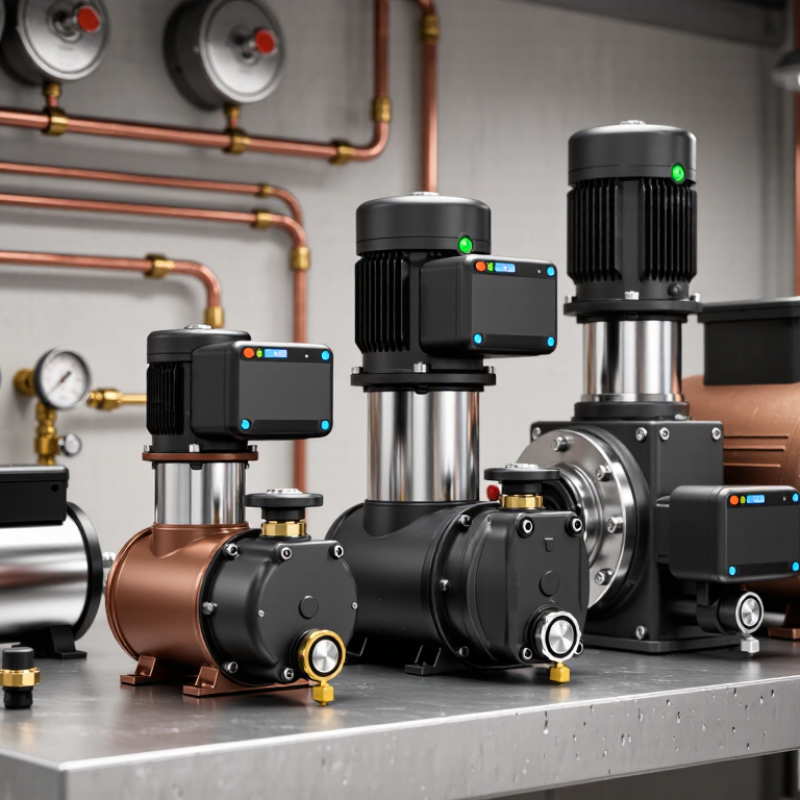
A heat recirculation pump moves heated water through a closed return loop. It does not create heat. Instead, it keeps warm water near fixtures, reducing long waits at taps and showers. When a tap opens, hot water arrives faster because the pipe already contains heated water. A temperature sensor, timer, or demand button controls the pump. Check valves prevent unwanted reverse flow.
Small details matter. Pipe insulation limits heat loss along the return route. Correct pump sizing supports steady circulation without excessive electricity use or noise.
The U.S. Department of Energy reports that water heating represents about 18% of household energy use. The International Energy Agency states that buildings consumed roughly 30% of global final energy in 2022. These figures explain why circulation design deserves careful attention.
Not every building needs continuous operation. A demand-controlled cycle may suit a lightly occupied home, while hotels and hospitals require more dependable availability.
Field commissioning should verify return temperature, flow rate, valve direction, and actual waiting time.
Oversized pumps can waste energy and create pipe noise. Undersized pumps may leave distant fixtures cold. The practical mistake is assuming faster circulation always means better performance. It does not.
Some systems also lose efficiency through poorly insulated pipes, even when the pump itself performs correctly. Geological location, water quality, voltage, and local installation standards can change the final selection.
Selecting among the top 10 heat recirculation pumps requires more than comparing catalog prices. Global buyers should match flow rate, pressure head, fluid temperature, and duty cycle to the real heating system. A pump rated for 60°C water may fail quickly in a 90°C loop. Check the operating curve, not only the maximum capacity. Stable performance matters more than an impressive peak number.
Energy use deserves close attention. Efficient motors, variable-speed control, and accurate temperature sensors can reduce unnecessary circulation. However, efficiency claims need test conditions. A model may perform well in a laboratory but consume more power with long pipes or frequent starts. Noise, vibration, seal quality, corrosion resistance, voltage compatibility, and available replacement parts also affect long-term reliability. Service access is often overlooked.
Tips: Request certified performance data and installation drawings. Confirm local electrical requirements before ordering. Test the pump under expected load, not empty-pipe conditions. Keep a small record of temperature, pressure, and power readings. It helps expose gradual wear. A spreadsheet can mislead. Field conditions are rarely perfect, and even a well-selected pump may need control adjustments after commissioning. Ask about warranty coverage, technical support, and delivery times in your region. A lower purchase price is not always a lower operating cost.
Key performance comparison by nominal flow capacity and maximum liquid temperature
The comparison uses anonymous pump configurations commonly found in residential heating, commercial hot-water circulation, solar thermal, and light industrial systems. Nominal flow is shown in liters per minute, while maximum liquid temperature is shown in degrees Celsius. Buyers should also verify head pressure, electrical frequency, seal compatibility, ingress protection, noise level, control method, and local certification requirements before selecting a pump.
Top 10 Heat Recirculation Pumps for Global Buyers
Top Heat Recirculation Pumps by Design, Capacity, and Application
Heat recirculation pumps differ sharply in design, capacity, and operating purpose. Inline pumps suit compact domestic hot-water loops with short pipe runs. End-suction designs handle higher flow and longer circulation distances. Magnetic-drive models reduce seal leakage risks in selected closed systems. Quiet operation matters in hotels, apartments, and healthcare buildings. Small systems may need only 0.5 to 3 cubic meters per hour. Larger process loops can require far higher flow rates. Always confirm the required head, temperature, and fluid chemistry.
Application determines more than pump size. Solar thermal systems need materials that tolerate temperature swings and intermittent operation. Industrial heat-transfer circuits demand accurate flow control and durable wetted components. District heating projects often prioritize service access, efficiency, and continuous-duty performance. I have seen installations fail because engineers checked flow but ignored pipe friction. Measure twice. A pump running far from its best efficiency point may waste energy and wear quickly.
Global buyers should review voltage, connection standards, protection ratings, and local compliance requirements. Stainless steel suits many clean-water systems, while other fluids may require specialized alloys or seals. Variable-speed control can match demand and reduce unnecessary cycling. However, control settings need commissioning, not assumptions. A practical selection also considers spare parts, maintenance skills, and the pump’s operating environment. The “best” model is rarely the largest one. It is the one that delivers stable heat where users need it.
Representative pump configurations ranked by operating range, thermal suitability, energy performance, and application versatility.
| Rank | Pump Configuration | Hydraulic Design | Flow Rate | Head Range | Fluid Temperature | Typical Fluid | Primary Application | Motor Output | Estimated Efficiency | Recommended Materials |
|---|---|---|---|---|---|---|---|---|---|---|
| 1 | High-Temperature Inline Circulator | Single-stage, close-coupled centrifugal | 5–120 m³/h | 8–45 m | −20 to 180 °C | Water, glycol mixtures, thermal fluid | District heating and HVAC primary loops | 0.75–22 kW | 55–78% | Cast iron or stainless steel; carbon/ceramic seal |
| 2 | Magnetic-Drive Process Circulator | Sealless centrifugal with permanent-magnet coupling | 1–35 m³/h | 5–32 m | −40 to 200 °C | Heat-transfer oils and corrosive liquids | Chemical processing and sealed thermal systems | 0.25–11 kW | 35–68% | 316 stainless steel, alloy shaft, carbon-filled PEEK |
| 3 | High-Flow End-Suction Recirculation Pump | Back-pullout, single-stage centrifugal | 30–500 m³/h | 12–70 m | 0–140 °C | Hot water and low-viscosity thermal fluids | Industrial heat-exchange networks | 7.5–90 kW | 65–84% | Ductile iron, stainless steel impeller, mechanical seal |
| 4 | Vertical Multistage Boiler-Loop Pump | Multistage centrifugal with vertical shaft | 2–80 m³/h | 30–180 m | 0–160 °C | Treated water and condensate | Boiler feed and pressurized hot-water circuits | 2.2–45 kW | 60–82% | Stainless steel stages, cast iron frame, alloy shaft |
| 5 | Variable-Speed Wet-Rotor Circulator | Electronically commutated wet-rotor centrifugal | 0.3–35 m³/h | 2–18 m | 2–110 °C | Heating water and water-glycol mixtures | Residential and commercial hydronic heating | 25–1,500 W | 35–72% | Cast iron or composite housing; ceramic bearing |
| 6 | Hot-Oil Thermal Transfer Pump | Single-stage centrifugal with heat-resistant bearing housing | 3–150 m³/h | 10–75 m | Up to 350 °C | Synthetic or mineral thermal oil | Textile, plastics, food, and chemical heating lines | 1.5–55 kW | 50–78% | Cast steel or stainless steel; graphite or silicon-carbide seal |
| 7 | Sanitary Hot-Water Recirculation Pump | Hygienic centrifugal with drainable casing | 1–60 m³/h | 5–40 m | 5–150 °C | Potable water and clean process water | Dairy, beverage, pharmaceutical, and food plants | 0.37–15 kW | 45–75% | 316L stainless steel; elastomers suitable for hygienic service |
| 8 | Solar Thermal Loop Pump | Compact high-temperature centrifugal with speed control | 0.2–12 m³/h | 3–25 m | −20 to 180 °C | Propylene-glycol solar fluid | Solar water heating and thermal storage | 30–750 W | 30–65% | Brass, stainless steel, or high-temperature composite |
| 9 | Sealless Canned-Motor Circulator | Canned-motor centrifugal with hermetic rotor chamber | 0.5–25 m³/h | 4–35 m | −30 to 2 |