
Top Rental Door Locks for Property Owners in 2026
Choosing a Rental Door Lock in 2026 is about more than buying the newest keypad. Property owners need dependable access, clear guest turnover, and a practical way to manage lost keys. A sleek touchscreen can look reassuring. But a dead battery on a rainy check-in night quickly changes the calculation. Fit matters, too: door thickness, existing hardware, and installation quality can affect performance.
Security technologist Bruce Schneier’s well-known observation, “Security is a process, not a product,” offers a useful lens. A lock works best as part of a routine: update access codes between stays, test backup entry, and explain the controls to guests. Small steps. Often overlooked. No single lock removes every risk, and smart features can add maintenance as well as convenience. That trade-off deserves a closer look.
This guide compares rental-friendly deadbolts, keypad locks, and connected models by security features, durability, access management, and ongoing costs. It considers the details owners meet in real properties: a stiff latch, a weak Wi-Fi signal, or guests who forget instructions. Some rankings will still involve judgment; no product performs identically on every door. Use the comparisons to match a lock to your property, turnover schedule, and comfort with technology—not just its feature list.
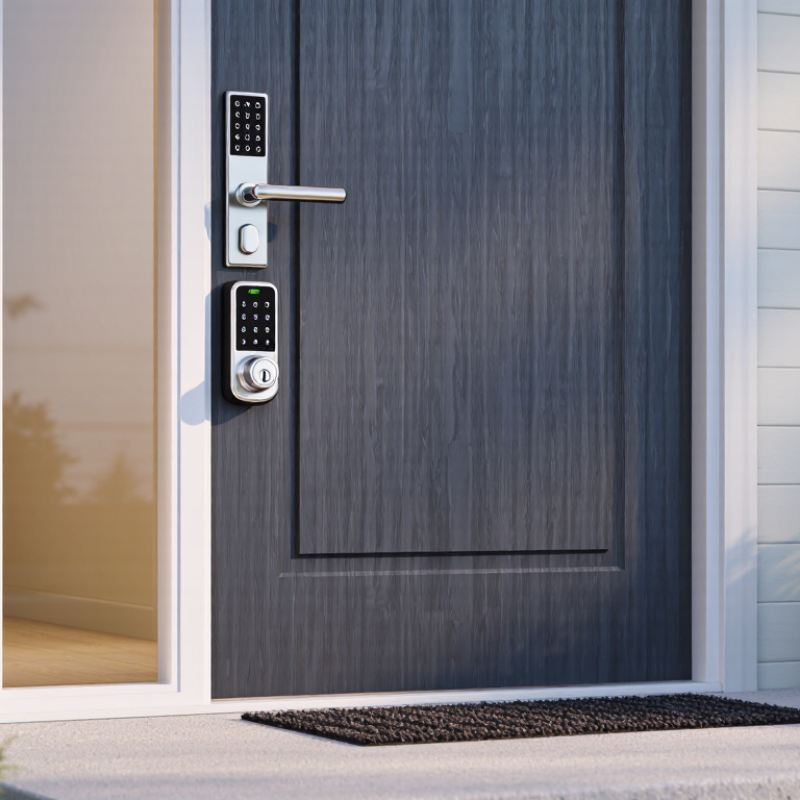
Understanding Door Lock Requirements for Rental Properties
Rental door-lock requirements start with the property’s location, building type, and adopted fire and housing codes. Many jurisdictions require secure exterior doors while allowing residents to exit without a key. A deadbolt that needs a key from inside can create an egress concern, so confirm local requirements before installation. Check that the latch reaches the strike plate cleanly and that tenants can operate the lock without a struggle.
The FBI’s 2019 Uniform Crime Reporting data recorded 1,117,696 burglaries; 62.8% involved residences. That figure describes reported crime, not lock effectiveness. Still, it underlines why landlords should treat access control as routine maintenance. Rekey or replace cylinders between tenancies, track who holds each key, and document repairs. Keep a spare key in a controlled, logged location—not under a loose planter. For product comparison, ANSI/BHMA performance standards offer a useful way to assess tested lock durability, but a grade alone cannot confirm code compliance. Details matter. Local rules differ, and older doors may need hardware adjustments before a new lock fits properly.
Top Rental Door Locks for Property Owners in 2026 - Understanding Door Lock Requirements for Rental Properties
| Lock type | Typical use | Access and security | Property-owner considerations | Best fit |
|---|---|---|---|---|
| Single-cylinder deadbolt | Commonly used on exterior entry doors, alongside a separate latch or handle. | Typically requires a key from outside and a thumb turn from inside. A properly installed deadbolt can add resistance to forced entry. | Check that occupants can exit readily from inside without a key. Confirm the door, frame, strike plate, and fasteners are in good condition. | Many standard residential entry doors where local rules and the door configuration permit it. |
| Keyed entry knob or lever | Often used as the primary latch on an exterior door, sometimes paired with a deadbolt. | Provides a keyed exterior lock and an interior release, but generally offers less resistance to forced entry than a separate deadbolt. | Do not assume a keyed knob alone meets local security requirements. Verify that the interior release works as intended and is not obstructed. | Interior or secondary doors, or as part of an approved entry-door hardware arrangement. |
| Keypad electronic deadbolt | Rental entry doors where temporary or individual access codes are useful. | May allow code-based entry and, on some models, a physical key backup. Features vary by model; electronic access does not itself ensure stronger physical security. | Set a process for changing codes between tenancies, managing battery replacement, and providing backup access. Preserve safe, convenient egress from inside. | Short-term or frequently turning-over rentals, when permitted and supported by a reliable access plan. |
| Connected smart deadbolt | Managed rentals where remote code administration or access records are needed. | Depending on the model and setup, may support remote management, scheduled codes, or access notifications. Network and power arrangements affect availability. | Plan for connectivity outages, account security, privacy, battery changes, tenant access, and a manual backup method. Follow applicable privacy and data rules. | Properties with dependable management and a documented digital-access procedure. |
| Mortise lock | Doors designed with a pocket in the edge to hold a mortise lock case; more common in some older or heavier doors. | Can combine latching and locking functions in one assembly. Security depends on the lock, cylinder, door, frame, and installation. | Replacement may require compatible dimensions and professional fitting. Confirm that the inside operation and any required egress function are suitable. | Existing doors built for mortise hardware or projects where compatible hardware is specified. |
| Panic or exit hardware | Certain doors in buildings or occupancies where building and fire codes require specific exit hardware. | Designed to allow opening from the egress side through an intended operating action; permitted configurations depend on the door and applicable code. | Do not substitute ordinary residential hardware without checking the approved door assembly and local requirements. Installation may need qualified review. | Applicable commercial, multifamily, or other regulated exit doors as determined by the authority having jurisdiction. |
| Rim lock or night latch | Surface-mounted supplementary hardware on compatible doors. | May provide an additional locking point, but design and inside-release behavior differ widely. | Check whether it can be opened from inside without a key and whether it interferes with required egress, accessibility, or fire-door operation. | Supplementary security on compatible doors where allowed by applicable codes and lease requirements. |
Rental-property compliance note: Lock, egress, fire-door, accessibility, and landlord-entry requirements vary by jurisdiction, building type, and door location. Before selecting or changing hardware, check local housing and building codes, lease obligations, and any requirements from the relevant authority. Ensure tenants receive all necessary keys or access credentials and that any required means of exit remains usable.