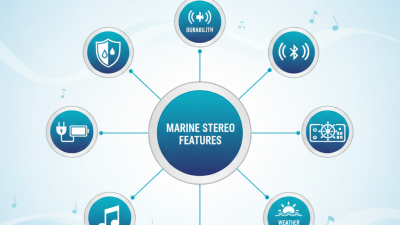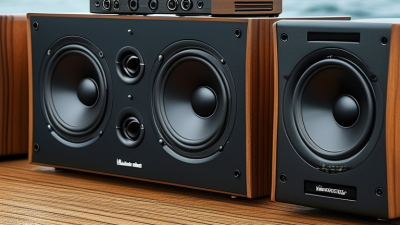
Choosing the right marine stereo can change how a boat feels underway. Wind, engine noise, spray, and bright sunlight challenge ordinary audio equipment. A marine stereo is built for these conditions, with sealed controls, corrosion-resistant materials, and stronger protection against moisture. However, not every product performs equally well. Real-world reliability depends on the stereo, speakers, wiring, and installation quality.
Imagine cruising across a choppy bay with salt mist covering the console. A dependable unit should remain readable, responsive, and easy to control. Look for clear water-resistance information, UV-resistant construction, and connectors suited to marine environments. Bluetooth, USB support, and smartphone control add convenience, but dependable physical controls still matter when your hands are wet. That detail is easy to overlook.
Sound quality matters, too. A well-planned system can keep vocals clear without forcing excessive volume. Speaker placement and amplifier matching often make a greater difference than a flashy feature list. Separate audio zones may help when the cockpit and cabin need different listening levels. Professional installation can reduce grounding noise, loose connections, and premature corrosion. Even expensive equipment can fail after poor wiring. I have learned that “marine-grade” should never replace careful inspection and maintenance. Owners should still rinse exposed surfaces with fresh water, check connections, and follow the manufacturer’s instructions. A marine stereo is not essential boating equipment, but it can improve long days on the water when selected thoughtfully. Music should enhance the journey, not distract from safe navigation.
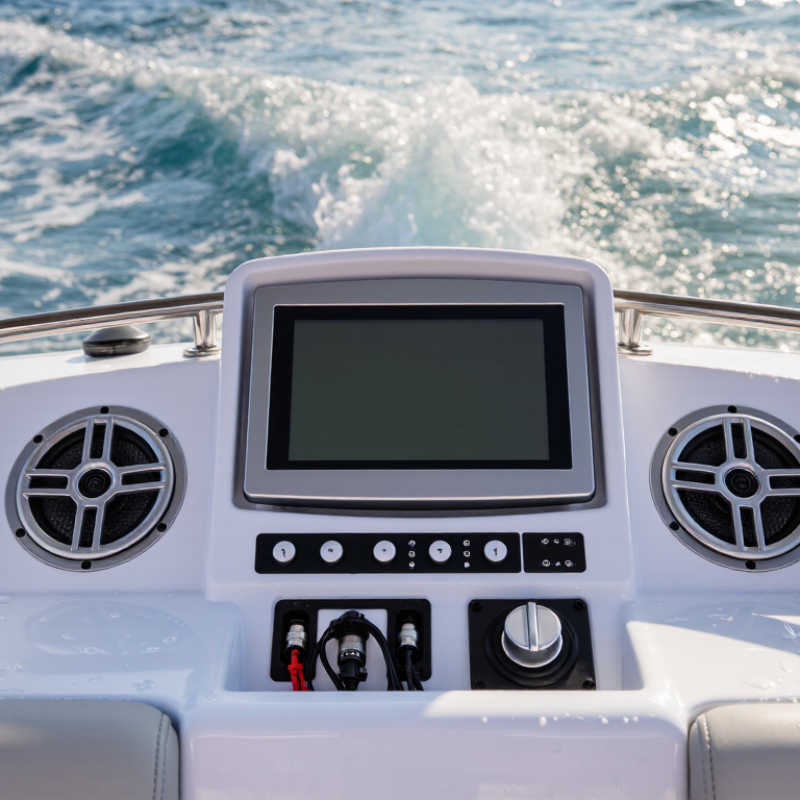
A marine stereo earns its place on a boat when ordinary cabin audio cannot handle spray, humidity, and sudden weather. The key detail is marine-grade protection, especially a IPX6 or IPX7 rating. IPX6 means the enclosure resists powerful water jets from multiple directions. IPX7 indicates protection during temporary immersion, typically up to one meter for 30 minutes under test conditions. These ratings describe water resistance, not unlimited waterproofing.
In practical use, I have seen waves splash across a helm while a properly sealed stereo continued playing. Salt mist still gathered around the controls, so rinsing with fresh water and drying the panel mattered. A rating does not protect an exposed cable joint or a poorly fitted mounting gasket. Installation is part of the protection. Use sealed connectors, tighten hardware evenly, and keep drainage paths clear. Do not aim a pressure washer at the unit. Too much force can defeat seals.
IPX7 can offer extra confidence near open cockpits, but it should not encourage careless placement. Check the product’s test scope, because some ratings apply only to the front panel or enclosure. I would also inspect buttons and cable entries after rough trips. Small cracks are easy to miss. They become expensive problems later. A marine stereo is a sensible choice when its protection matches the boat’s real exposure, maintenance habits, and installation quality. That last part is often underestimated.
A marine stereo faces more than occasional splashes. Salt mist can reach terminals, control buttons, speaker grilles, and hidden fasteners. ASTM B117 testing helps evaluate how materials resist a controlled salt-fog environment. A qualified laboratory typically exposes test samples to a saline mist at about 35°C. Test duration varies by design and testing plan.
The details matter. Technicians inspect surfaces for blistering, rust, coating failure, and loss of function. They may also examine connector seals after exposure. A strong result suggests better resistance to coastal moisture. It does not guarantee unlimited service on a boat. Real vessels experience vibration, sunlight, condensation, and repeated wet-dry cycles.
That distinction deserves attention. Salt spray is controlled. Your boat is not. A stereo with corrosion-resistant housing and sealed connections can still fail after poor installation. Water trapped behind a panel may cause trouble quietly. I would protect cable joints, create drip loops, and rinse exposed surfaces with fresh water. Avoid directing high-pressure spray at controls and openings.
Small choices help. Use marine-rated components. Check the mounting area regularly. Look for green residue, loose terminals, or faded seals. ASTM B117 cannot measure every part of daily marine use, but it provides a useful comparison when test methods are clearly reported. That transparency builds confidence, even when the result is not perfect.
A marine stereo suits wet, salty, and constantly moving environments. However, sound quality depends on more than speaker size. Your 12-volt electrical system must support the stereo without weakening essential equipment.
Start with RMS wattage, not peak figures. A four-channel unit producing 50 watts RMS per channel needs 200 watts at full output. At 12.6 volts and 85% efficiency, the amplifier may draw about 19 amps. Use this estimate for planning, not advertising numbers. My first calculation was too optimistic because I ignored volume changes and startup demand. Real listening levels often vary sharply.
Battery capacity requires similar caution. A 100Ah battery does not always provide 100Ah safely. Reserve capacity, battery condition, temperature, and other equipment reduce available energy. If your stereo averages 8 amps, a 100Ah battery might appear to last over twelve hours. That estimate can fall quickly when pumps, navigation lights, or refrigeration operate together. Leave a practical reserve.
Tips: Measure current with a clamp meter during normal listening. Check the cable length before choosing wire size. Protect the circuit with a correctly rated fuse near the battery. Keep the battery ventilated and dry. Test your system at anchor, not only at the dock. A modest stereo with stable power is usually better than a louder system that drains the battery unexpectedly.
Why Choose a Marine Stereo for Your Boat?
Onboard sound quality depends on more than speaker size. Sensitivity shows how loudly a speaker plays from a fixed electrical input. IEC 60268-5 measures loudspeakers at a defined distance and voltage. Many marine speakers sit near 87–92 dB SPL at 2.83 volts and one meter. A higher rating can reduce amplifier demand. Three decibels more sensitivity roughly halves the power needed for similar output. That matters when engine noise, wind, and open water absorb musical detail.
Impedance describes the electrical load seen by the amplifier. A 4-ohm speaker can draw about twice the current of an 8-ohm speaker at the same voltage. Confirm the amplifier supports that load, especially with several speakers connected. Output also falls with distance. In free-field acoustics, doubling distance can reduce level by approximately 6 dB. Real boats reflect sound, so results vary. I have found that cockpit corners sound fuller, while exposed bow areas need more output. My first choice is not always the loudest speaker.
Tips: Compare sensitivity using the same test method. Check nominal and minimum impedance. Leave amplifier headroom for clean peaks. Avoid judging sound beside a running engine. The AES2-2012 loudspeaker measurement standard supports consistent testing, but specifications cannot reproduce every boat layout. A 90 dB speaker may sound weaker if mounted poorly. That is easy to overlook.
| Specification | Typical Marine-Stereo Range | Effect on Onboard Sound Quality | Practical Selection Guidance |
|---|---|---|---|
| Speaker sensitivity | Approximately 84–92 dB SPL at 1 W / 1 m | Higher sensitivity produces more acoustic output from the same amplifier power. This is useful on boats where engine, wind, and water noise can mask music. | Choose higher-sensitivity speakers when using a modest marine amplifier or when clear sound is needed across an open cockpit. |
| Nominal impedance | Commonly 4 Ω; some systems use 2 Ω or 8 Ω designs | Impedance affects the electrical load seen by the amplifier. A lower impedance can allow more power, but it also increases current demand and amplifier heat. | Match the speaker impedance with the amplifier's rated load. Do not connect a load below the amplifier's minimum specified impedance. |
| Continuous power handling | Approximately 30–100 W RMS per speaker for many recreational installations | RMS handling indicates the approximate continuous electrical power a speaker can manage under defined test conditions. It is more useful for system matching than peak power. | Select a speaker RMS rating that is compatible with the amplifier's continuous output, while avoiding prolonged clipping or overdriving. |
| Peak or maximum power | Often about 2× the stated RMS rating | Peak figures describe short-duration handling and may use different test methods. They do not represent normal continuous listening output. | Use RMS values when comparing speakers, amplifiers, and wiring. Treat peak ratings as secondary information. |
| Theoretical SPL at 1 m | 87 dB sensitivity at 50 W ≈ 104 dB SPL; 90 dB sensitivity at 50 W ≈ 107 dB SPL | The approximate calculation is: sensitivity + 10 × log10(amplifier power in watts). It shows why sensitivity can be as important as amplifier wattage. | These are idealized near-field estimates. Real boat installations may produce lower levels because of distance, reflections, wind, engine noise, and speaker placement. |
| Perceived loudness increase | A 3 dB increase requires approximately twice the amplifier power; a 10 dB increase is commonly perceived as roughly twice as loud | Small sensitivity differences can substantially affect the amplifier power required for similar loudness. | A 90 dB speaker generally needs less power than an 87 dB speaker to reach the same theoretical SPL. |
| Frequency response | Common full-range designs: approximately 50 Hz–20 kHz, depending on enclosure and installation | A wider response can improve bass depth and high-frequency detail, but measured response does not guarantee equal output across the entire range. | For strong low bass on an open boat, use a properly installed marine subwoofer rather than expecting small full-range speakers to reproduce deep bass efficiently. |
| Speaker quantity and placement | Two or more speakers are commonly used to distribute sound around the listening area | Even coverage usually sounds clearer than forcing one speaker pair to play at an unnecessarily high level. | Aim speakers toward the listening area, keep left and right channels reasonably balanced, and avoid mounting locations that are easily blocked by seats or equipment. |
| Marine durability | Moisture-resistant materials, corrosion-resistant terminals, sealed assemblies, and UV-resistant grilles are commonly used | Protection from spray, humidity, salt, and sunlight helps preserve the speaker's electrical and acoustic performance over time. | Look for documented water, UV, and corrosion resistance appropriate to the installation location. Correct sealing and cable routing remain essential. |
| Amplifier compatibility | Common stereo amplifier loads include 4 Ω per channel; exact limits vary by design | Correct matching reduces distortion, overheating, protection shutdowns, and premature component failure. | Compare RMS output at the actual speaker impedance, confirm channel wiring, and provide adequate ventilation and correctly sized marine-grade wiring. |
Why Choose a Marine Stereo for Your Boat?
A marine stereo must survive spray, vibration, salt, and sudden voltage changes. Safe installation matters more than loud output. ABYC E-11 recommends marine-grade, tinned copper conductors for better corrosion resistance. Each positive circuit should have overcurrent protection near its power source, normally within seven inches. The fuse protects the wire, not merely the stereo. Choose its rating from the cable’s allowable ampacity and the equipment instructions.
Use sealed crimp terminals, adhesive-lined heat-shrink tubing, and supported cable runs. Avoid household wire nuts. Keep audio cables away from ignition wiring when practical, and leave a small drip loop before connections. A battery switch can simplify isolation during maintenance, but it does not replace branch-circuit fusing. The installation should also include correct polarity, a secure negative return, and strain relief behind the control panel.
Small details matter. A neat panel can still hide an unsafe fuse location. I would recheck every terminal after the first outing, because vibration reveals mistakes. The U.S. Coast Guard’s 2023 Recreational Boating Statistics report recorded 3,844 recreational boating incidents, 564 deaths, and 2,126 injuries. Those figures do not identify marine audio as a cause, but they underline the value of disciplined electrical work. ABYC guidance is voluntary in many locations, yet it remains a respected technical reference for builders and installers. Local requirements may differ, so a qualified marine electrician should review unusual layouts, high-current amplifiers, and shared battery circuits.
Safe Installation: ABYC Guidelines for Marine Audio Wiring and Fusing
ABYC E-11 design guidance commonly uses a maximum DC voltage drop of 3% for essential circuits and 10% for non-essential circuits. A marine stereo is normally treated as a non-essential load unless the vessel design assigns it another classification. Install overcurrent protection in the positive conductor as close to the power source as practicable; ABYC guidance commonly references 7 inches (175 mm) where practicable. Always size the fuse and conductor for the equipment instructions, circuit ampacity, and the applicable standard.
Reference: ABYC E-11 marine electrical systems guidance. Values shown are maximum design voltage-drop limits.

| Sunday | CLOSED | |
| Monday | 9AM-12PM | 1PM-6PM |
| Tuesday | 9AM-12PM | 1PM-6PM |
| Wednesday | 9AM-12PM | 1PM-6PM |
| Thursday | CLOSED | |
| Friday | 9AM-12PM | 1PM-6PM |
| Saturday | 10AM-12PM | 1PM-6PM |
Please note that we are closed for lunch from 12PM-1PM daily.