
How to Choose the Best Car Audio System?
Choosing the best car audio system is not about buying the most expensive equipment. It is about matching sound quality, vehicle space, listening habits, and installation limits. A compact hatchback may need different speakers than a large SUV. Factory doors also vary in depth, strength, and acoustic insulation.
This guide explains how to compare speakers, amplifiers, subwoofers, head units, and digital signal processors. It also examines power ratings, sensitivity, impedance, frequency response, and practical installation costs. Many buyers focus on bass first. That can be a mistake. Clear vocals and controlled midrange usually create a more enjoyable drive. A reliable audio system car audio setup should work smoothly with your vehicle’s electrical system and factory controls.
Small details matter.
For example, a well-fitted speaker can sound better than a powerful speaker installed poorly. Door damping may reduce vibration from thin metal panels. Correct wiring can prevent noise, heat, and avoidable failures. Professional installers should follow manufacturer instructions and local vehicle safety requirements. Steering-wheel controls, airbags, visibility, and driver attention must not be compromised.
There is no universal “best” system. I have seen impressive specifications disappoint inside a poorly treated cabin. I have also seen modest equipment perform beautifully after careful tuning. That is why this guide encourages measured decisions, honest comparisons, and realistic expectations. Your preferred music, daily driving conditions, budget, and willingness to modify the vehicle should shape the final choice. Consider this a practical starting point, not a perfect formula.
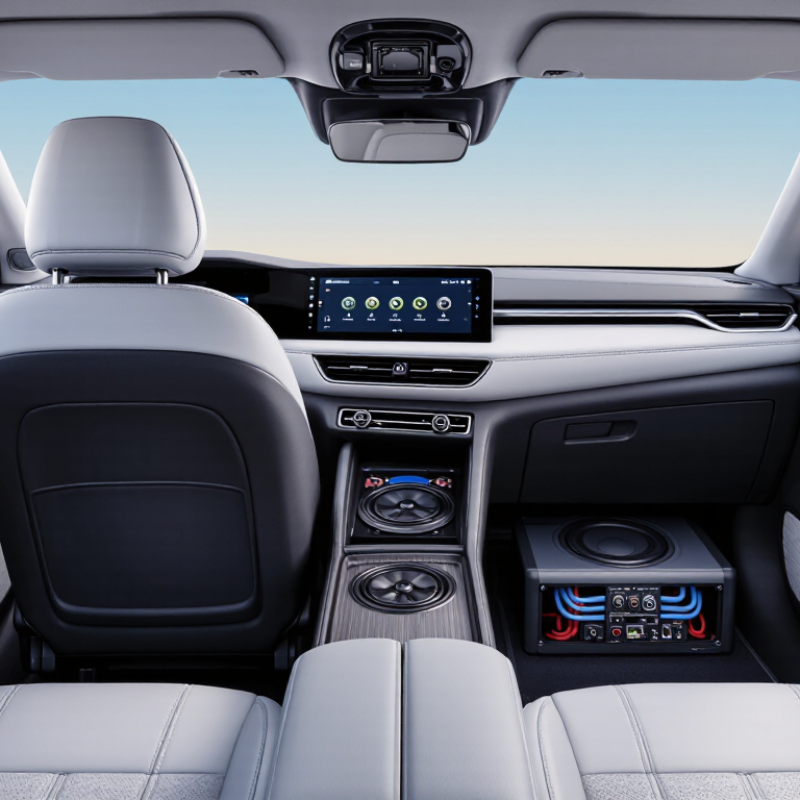
Define Your Car Audio Goals and Listening Preferences
Choosing the best car audio system begins with your listening habits, not the loudest specification. Ask where you listen most: morning traffic, weekend highways, or parked evenings. Do you prefer clear vocals, deep bass, or balanced detail? A system that sounds exciting for five minutes may become tiring after an hour.
Edison Research and Triton Digital’s 2024 Infinite Dial report found that 76% of U.S. adults use online audio monthly. That trend makes phone integration and stable streaming important. However, streaming quality varies. Lossy files can hide delicate cymbals and room ambience. For serious listening, compare familiar recordings at the same volume. Check RMS power, speaker sensitivity, impedance, and frequency response. Numbers alone can mislead. I once overvalued peak wattage and ignored poor cabin tuning; the result was loud, but thin. The mistake was useful.
Tips: Write three audio goals before shopping. For example, “clear speech,” “controlled bass,” and “easy phone access.” Bring two familiar tracks. Listen from the driver’s seat, not beside the open door. Test at low volume, too. A competent installer should explain crossover points, time alignment, and safe gain settings. J.D. Power’s 2024 U.S. Tech Experience Index Study shows that technology usability strongly affects vehicle satisfaction, so complicated controls deserve careful attention. You may need less equipment than expected.
How to Choose the Best Car Audio System? - Define Your Car Audio Goals and Listening Preferences
| Listening Goal | Preferred Sound | Recommended System Type | Useful Components | Practical Specification | Typical Budget Range | Main Trade-Off |
|---|---|---|---|---|---|---|
| Clear everyday listening | Balanced vocals, moderate bass, low listening fatigue | Coaxial speaker upgrade with basic sound tuning | Front coaxial speakers, compact subwoofer, digital media receiver | RMS power matched to the speakers; approximately 45–75 W RMS per channel | Approximately $300–$700 | Less precise imaging than a component-speaker system |
| Detailed vocals and acoustic music | Natural midrange, clear vocals, accurate instrument placement | Front component-speaker system with careful installation | Separate tweeters, midrange drivers, crossover network, door damping | Two-way component set; tweeters positioned near ear level when possible | Approximately $600–$1,200 | Higher installation complexity and less available door space |
| Strong, controlled bass | Deep low frequencies with tight response rather than excessive boom | Front speaker upgrade with a dedicated subwoofer and amplifier | Sealed or ported subwoofer enclosure, mono amplifier, bass control | A 10-inch subwoofer commonly covers approximately 30–120 Hz in a properly designed enclosure | Approximately $700–$1,500 | Uses cargo space and may require additional electrical capacity |
| High-volume listening | Dynamic, energetic sound that remains clean at elevated levels | Multi-channel amplifier with speakers rated for sustained power | External amplifier, efficient speakers, subwoofer, upgraded wiring | Choose amplifier RMS output within the speaker's continuous-power range | Approximately $900–$2,000 | Greater cost, heat generation, and installation demands |
| Streaming and hands-free convenience | Simple control, reliable wireless audio, clear phone calls | Modern digital receiver with smartphone integration | Bluetooth, wired smartphone connection, microphone, steering-wheel interface | Bluetooth commonly supports wireless audio and calls; wired integration can support charging and additional controls | Approximately $250–$800 | Vehicle-specific adapters may increase installation cost |
| Accurate, adjustable sound | Precise staging, controlled frequency response, personalized tuning | Full system with digital signal processing | DSP, time alignment, equalizer, active crossover, measurement microphone | A 10-band or parametric equalizer provides more adjustment than basic bass and treble controls | Approximately $1,000–$2,500 | Requires careful calibration and may be excessive for casual listeners |
| Factory appearance and minimal modification | Improved clarity while retaining an original-looking interior | Speaker replacement with a compact powered subwoofer | Vehicle-fit speakers, sound-deadening material, under-seat powered subwoofer | Powered subwoofers often combine an amplifier and enclosure in a low-profile design | Approximately $400–$1,000 | Limited maximum output compared with a separate amplifier and enclosure |
Related Posts
-
How to Choose the Best Car Audio System Supplier?
-
China Best Car Audio System Suppliers for Global Buyers
-
Unlocking the Future of Driving: How Car Multimedia Players are Transforming In-Car Entertainment
-
Why You Should Consider Mobile Audio Installation for Your Vehicle Today
-

Best Car Multimedia Player Features to Look for in 2026?
-

Top 10 Car Music Systems You Should Consider Today?