China Best Car Audio System Suppliers for Global Buyers
China has become a major sourcing base for global automotive audio products. Its supplier network covers speakers, amplifiers, DSP modules, subwoofers, head units, and complete audio system car audio solutions. However, factory scale alone does not guarantee dependable performance.
Grand View Research estimated the global automotive audio market at approximately USD 8.5 billion in 2023. Its 2024 analysis expects continued growth through 2030, supported by connected vehicles, cabin personalization, and premium sound upgrades. Mordor Intelligence also identifies integration with infotainment and advanced vehicle electronics as important market drivers. These findings matter to importers. A low unit price can lose its value when tuning, compatibility, or after-sales support fails.
The details are practical. A serious supplier should show frequency-response tests, amplifier efficiency data, DSP tuning records, and production traceability. It should also explain compatibility with CAN bus, Android-based head units, factory wiring, and regional certification requirements. Dinesh C. Paliwal, former Harman chairman and CEO, described the automobile as “the last private space.” That idea explains why sound quality increasingly influences the driving experience.
Still, supplier comparisons are not perfectly clean. Some reports combine OEM and aftermarket categories. Some factories present laboratory results without vehicle-level testing. Buyers should question both. A reliable evaluation includes sample installation, listening tests, vibration checks, and communication audits. Small details matter: a loose connector, harsh treble, or delayed firmware update can damage an otherwise impressive project. This guide examines China’s best car audio system suppliers through performance, engineering depth, compliance awareness, customization, and long-term export reliability.
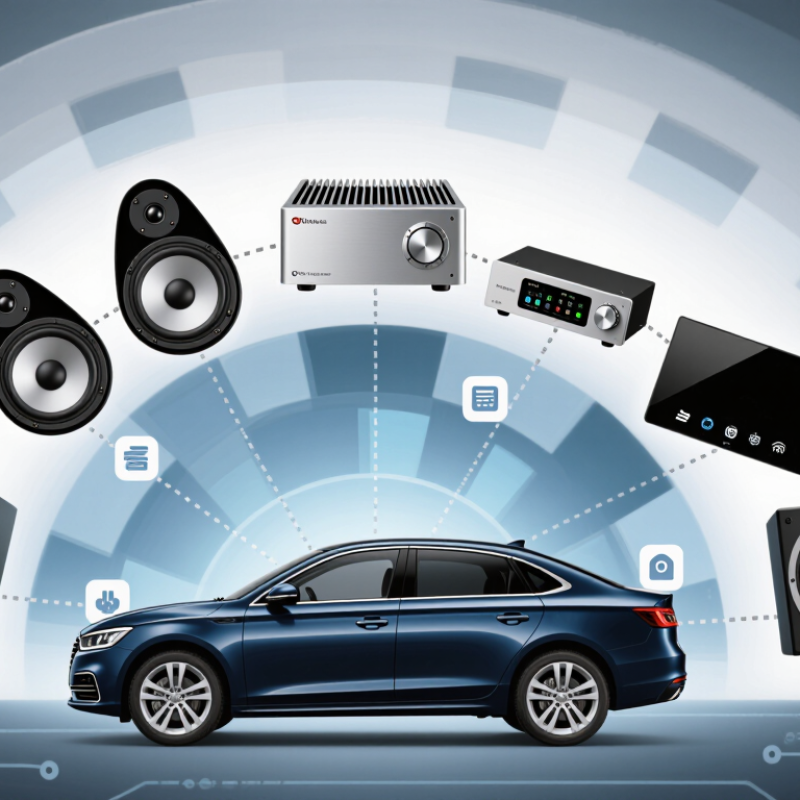
China’s Car Audio Supplier Landscape: OEM, ODM, and Aftermarket Segments
China’s car audio supplier landscape divides into OEM, ODM, and aftermarket segments. OEM suppliers develop systems around vehicle platforms, testing cycles, and factory quality controls. They usually provide speakers, amplifiers, wiring, and software integration. CAAM reported 31.28 million vehicles produced in China in 2024, creating a substantial domestic validation base.
ODM suppliers offer more adaptable engineering. Buyers can request custom speaker layouts, display interfaces, DSP tuning, and enclosure materials. This model suits importers with their own product identity but limited engineering teams. Grand View Research estimates the global automotive audio market will grow steadily through 2030, supported by connected cabins and premium in-car entertainment. The report also highlights rising demand for integrated digital systems, not isolated speakers.
Aftermarket suppliers move faster. They serve replacement, upgrade, and regional fitment needs. Practical checks include connector accuracy, dashboard depth, heat resistance, and installation instructions. Fitment still matters. A low price cannot repair poor installation.
The numbers are imperfect. Public reports often combine factory-installed and replacement audio products. Buyers should request recent test records, sample units, warranty terms, and production capacity evidence. TÜV-style laboratory documentation can support confidence, but it does not replace independent sample testing. In my experience, suppliers that explain failed tests openly are often easier to manage than suppliers promising flawless performance. Industry forecasts guide decisions, but actual compatibility decides repeat orders.
China’s 2023 Vehicle Output Reached 30.16 Million Units: Market Implications
China’s vehicle output reached 30.16 million units in 2023, according to official industry data. This scale signals strong demand for vehicle audio systems and related electronics. It also creates a crowded sourcing environment for global buyers.
Large production volumes support faster tooling, wider component access, and competitive pricing. Suppliers can often customize speakers, amplifiers, displays, and wiring for different vehicle platforms. In supplier evaluations, however, volume alone can mislead. A factory producing many units may still struggle with stable sound quality or software integration.
Ask for measurable evidence. Review frequency-response tests, vibration results, temperature testing, and sample approval records. Check whether production samples match the approved engineering sample. Small differences matter. A loose connector can cause noise after months of road vibration. Suppliers should also explain material traceability, inspection stages, packaging methods, and export documentation. Compliance with destination-market requirements must be verified before shipment.
China’s expanding vehicle output may shorten development cycles, but it can pressure factories to move too quickly. That risk deserves attention. Global buyers should compare production capacity with engineering support, quality staffing, and after-sales communication. A supplier with clear technical drawings and realistic delivery dates is often more dependable than one offering the lowest quotation. The market is large, but consistency remains the harder measure.
China Best Car Audio System Suppliers for Global Buyers - China’s 2023 Vehicle Output Reached 30.16 Million Units: Market Implications
| Market Dimension |
2023 Result |
Year-on-Year Change |
Implications for Global Car Audio Buyers |
| Total vehicle production |
30.16 million units |
+11.6% |
A large manufacturing base supports broad supplier capacity, component availability, and scalable private-label production. |
| Total vehicle sales |
30.09 million units |
+12.0% |
Strong domestic demand encourages continued investment in factory automation, testing, software integration, and aftermarket support. |
| Passenger vehicle production |
26.12 million units |
+9.6% |
Passenger vehicles provide the largest application base for head units, speakers, amplifiers, digital sound processing, and connected infotainment. |
| Commercial vehicle production |
4.04 million units |
+26.8% |
Fleet, truck, bus, and van applications create opportunities for durable audio systems, hands-free communication, navigation, and fleet-focused upgrades. |
| New-energy vehicle production |
9.59 million units |
+35.8% |
Fast electrification increases demand for compact, energy-efficient, software-defined audio systems and vehicle-network integration. |
| New-energy vehicle sales |
9.50 million units |
+37.9% |
Buyers should prioritize suppliers experienced with digital cockpits, touchscreen interfaces, smartphone connectivity, and low-voltage vehicle electronics. |
| Total vehicle exports |
4.91 million units |
+57.9% |
Export-oriented suppliers are more likely to understand international compliance, multilingual interfaces, packaging requirements, and overseas warranty support. |
| New-energy vehicle exports |
1.20 million units |
+77.6% |
International demand for electric vehicles supports sourcing of adaptable audio platforms that can be configured for different vehicle architectures and markets. |
| Vehicle production share represented by new-energy vehicles |
Approximately 31.8% |
Up from approximately 27.1% in 2022 |
The product mix is shifting toward connected and software-led vehicles, making compatibility testing and firmware support key supplier-selection criteria. |
| Recommended buyer evaluation criteria |
Technical and commercial due diligence |
Ongoing requirement |
Evaluate ISO-certified production, audio performance testing, EMC compliance, CAN or automotive Ethernet integration, customization capability, minimum order quantity, lead time, and after-sales service. |
|
Data sources: China Association of Automobile Manufacturers (CAAM), 2023 annual vehicle production, sales, and export statistics; calculated shares are based on CAAM figures and rounded for presentation. Figures refer to China’s automotive industry and do not represent any individual company or brand.
|
Supplier Verification Using IATF 16949, ISO 9001, CE, FCC, and E-Mark
China Best Car Audio System Suppliers for Global Buyers
Supplier verification should begin with IATF 16949, not a polished product catalogue. This automotive quality standard shows whether a factory controls design changes, traceability, supplier risks, and corrective actions. Ask for the certificate scope, site address, expiry date, and issuing body. The certificate must cover the actual production location.
ISO 9001 adds broader quality management evidence. However, certification alone proves little. Request recent internal audit records, process flow charts, inspection plans, and sample nonconformity reports. During a factory visit, check barcode labels, incoming inspection areas, and calibration stickers on testing equipment. Small details matter. We have seen attractive documentation hide weak production discipline.
CE and FCC evidence should match the exact audio model and hardware revision. Review test reports for electromagnetic compatibility, emissions, and applicable safety requirements. A report for an older circuit board may not support a redesigned unit. E-Mark verification requires special care because approval is linked to vehicle-related requirements and designated approval authorities. Confirm the approval number, product scope, and technical documents directly. Do not accept screenshots without verification. That mistake is easy. A reliable supplier also explains failures clearly, shares corrective actions, and welcomes independent testing before shipment. Some factories may lack perfect records, but honest gaps are easier to manage than invented compliance.
MOQ, Lead Time, Warranty, and Landed-Cost Benchmarks for Global Buyers
China Best Car Audio System Suppliers for Global Buyers
MOQ, lead time, warranty, and landed cost should be compared together. Market sourcing benchmarks often show 100–300 units for standard systems. Customized dashboards may require 500 units or more. Published reports rarely standardize MOQ. Treat these figures as negotiation ranges, not fixed rules. Ask for a pilot order with production samples and a written inspection standard.
A practical production benchmark is 25–45 days after artwork, specifications, and deposit approval. The World Bank’s 2023 Logistics Performance Index shows major differences in customs speed, tracking, and delivery reliability. Build buffer time. A delayed connector can stop an entire installation batch. Warranty terms commonly span 12–24 months, but the wording matters more than the headline. For European consumer sales, European Commission guidance confirms a two-year legal guarantee. Business contracts may differ. Define dead-on-arrival handling, repair limits, spare-part availability, and return freight responsibility.
Landed cost needs more than the factory quote. UNCTAD’s Review of Maritime Transport reports that over 80% of world merchandise trade by volume moves by sea. For example, 500 systems at 85 dollars each equal 42,500 dollars before logistics. Freight, insurance, duty, port handling, testing, and inland delivery could raise the total near 53,000 dollars, or 106 dollars per unit. This is only an illustration. Duty classification and routing can change the result sharply. The cheapest quotation is sometimes the expensive mistake. I would still challenge my own forecast after receiving the forwarder’s final rate.
China Best Car Audio System Suppliers for Global Buyers
MOQ, lead time, warranty, and landed-cost benchmarks for global buyers
The chart compares typical China sourcing benchmarks by supplier type. Landed cost is estimated per complete car-audio system and includes product value, export handling, international freight, and import-related charges, but excludes local installation. Values are indicative market benchmarks and may vary with specifications, order volume, destination, and shipping method.