
Why Do Car Speakers Sound Different?
A car can make the same song sound bright, muddy, thin, or surprisingly full. The difference is rarely explained by the car speaker alone. Speaker size, materials, sensitivity, and installation all shape what reaches your ears. Even two vehicles with similar factory systems can sound distinct. Small details matter. A speaker mounted low in a door may send sound toward your legs, while another position points it closer to your ears. The cabin adds its own effects, reflecting some frequencies and absorbing others. Road noise can also mask quiet details, especially at highway speed. Not always. A higher price does not automatically mean better sound in every vehicle.
Understanding these influences makes comparisons more useful. A balanced listening test should use the same track, volume, and source whenever possible. Notice whether vocals sound natural, bass stays controlled, and cymbals become harsh at louder levels. Then consider the system around the speaker. The head unit, amplifier, wiring, and digital equalizer can affect performance, while poor mounting or loose door panels may create rattles. Product specifications offer clues, but they cannot fully predict how a speaker will sound inside a particular cabin. This guide explores why car speakers differ and which factors are worth checking before choosing an upgrade. Some impressions remain subjective; a sound that feels warm to one listener may seem dull to another. The useful approach is to compare carefully, verify fit and specifications, and keep expectations realistic.
How Car Speakers Convert Electrical Signals into Sound
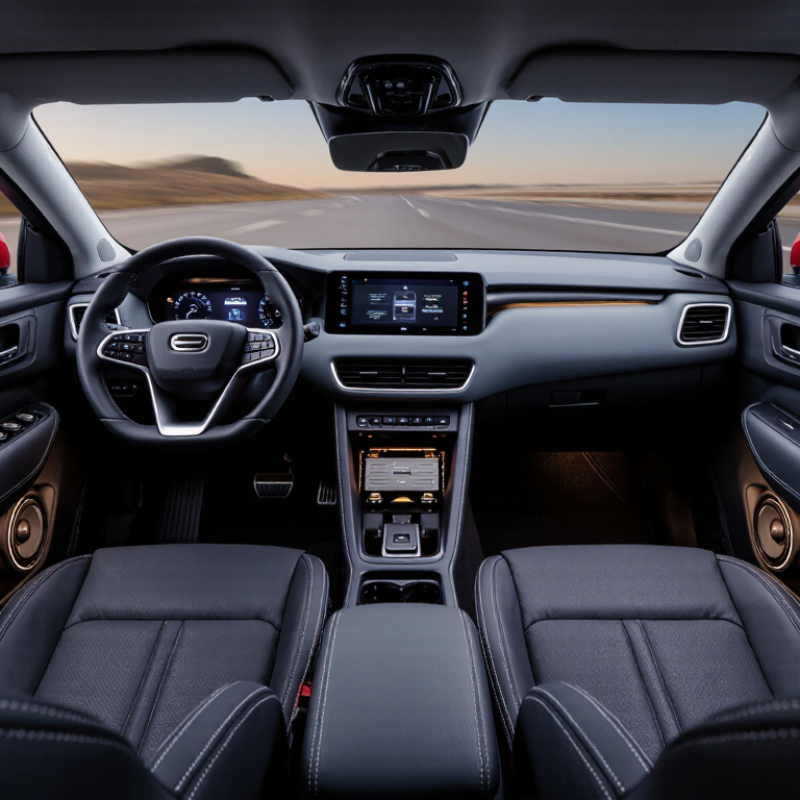
A car speaker turns an electrical waveform into moving air. The amplifier sends alternating current through a voice coil. Inside the speaker’s magnetic field, the coil moves back and forth, pushing the attached cone. The cone compresses and releases nearby air, creating sound waves. A bass note moves the cone visibly; a sharp cymbal sound makes it vibrate rapidly. Crossovers route low and high frequencies to suitable drivers. The process is simple in principle, but small design differences can change the result.
The cabin matters too. Door panels can rattle, glass reflects treble, and seats absorb some sound. A speaker may sound clear near the dashboard yet muddy in the back seat. IEC 60268-5 sets methods for measuring loudspeaker characteristics, including frequency response and sensitivity. These measurements help compare products under controlled conditions, but they cannot fully predict a particular car’s acoustics. That gap is worth remembering.
Tips: Adjust balance and fade from the driver’s seat, then listen from the rear. Change one setting at a time. NIOSH recommends limiting occupational exposure to 85 dBA over eight hours, with allowable exposure time falling as sound rises. This is workplace guidance, not a car-specific limit, but it is a useful reminder: loudness can hide detail, and comfort matters.
| Factor | What Happens | How It Can Change the Sound | Real-World Example |
|---|---|---|---|
| Electrical signal and amplifier | The amplifier sends a changing electrical signal through the speaker’s voice coil. The signal’s changing current creates a changing magnetic force. | The speaker can only reproduce the signal cleanly when it receives an appropriate amount of power. Clipping or excessive power can cause audible distortion or damage. | Turning the volume up beyond an amplifier’s clean output can make loud passages sound harsh or crackly. |
| Voice coil, magnet, and cone | The magnetic force moves the voice coil and attached cone back and forth. The cone’s motion pushes and pulls the surrounding air, creating sound waves. | Different driver designs and materials can behave differently in motion, affecting frequency response, distortion, and how consistently the cone moves. | A driver that moves unevenly at high output may produce more distortion than it does at moderate listening levels. |
| Frequency response | Frequency response describes how strongly a speaker reproduces different frequencies, usually measured in hertz (Hz). | More output in the bass, midrange, or treble can make a system sound fuller, more forward, or brighter. The response also depends on installation and measurement conditions. | A system with less low-frequency output may make kick drums and bass notes sound lighter. |
| Sensitivity | Sensitivity indicates how much sound output a speaker produces for a specified electrical input. It is commonly reported in decibels (dB) at a stated distance and power or voltage. | A more sensitive speaker can play louder than a less sensitive one with the same input under comparable test conditions. Sensitivity alone does not determine sound quality. | When comparing speakers, check that their sensitivity figures use comparable measurement methods. |
| Impedance and amplifier matching | Impedance, measured in ohms (Ω), describes how a speaker resists alternating current. It varies with frequency rather than staying constant across the entire audio range. | An amplifier’s output and stability depend partly on the connected load. A load below the amplifier’s supported range can cause overheating, protection shutdown, or distortion. | Check that the speaker wiring and combined load meet the amplifier’s specified impedance requirements. |
| Speaker size and frequency range | Drivers of different sizes and designs are suited to different frequency ranges, though size alone does not define performance. | A small door speaker may have limited deep-bass output, while a dedicated subwoofer is designed to reproduce lower frequencies with greater cone excursion. | A subwoofer can add low bass that ordinary door speakers may not reproduce strongly. |
| Crossover and speaker system design | A crossover divides the audio signal into frequency bands and sends them to suitable drivers, such as woofers and tweeters. | Crossover frequencies, slopes, and driver integration affect tonal balance and whether there are gaps or overlaps between frequency ranges. | A poorly integrated woofer and tweeter can make vocals sound uneven around the range where their output overlaps. |
| Mounting and door environment | Doors, panels, grilles, and air leaks affect how the speaker’s front and rear sound waves interact. | Loose panels can buzz; air leaks and mounting differences can reduce bass output or create unwanted resonances. | Securing a vibrating door panel may remove a rattle that is mistaken for speaker distortion. |
| Speaker placement and listening position | Sound reaches the driver and passenger from different distances and angles. Reflections from windows and interior surfaces also affect what each listener hears. | These differences can change perceived stereo imaging, treble level, and tonal balance from seat to seat. | A tweeter aimed toward one seat may sound brighter there than it does from the opposite seat. |
| Equalization and signal processing | Equalizers and other processing adjust signal levels across frequencies; time alignment can adjust when sound from different speakers reaches the listener. | Processing can compensate for some system and cabin effects, but excessive boosts may use up amplifier headroom and increase distortion. | A small bass boost may improve balance, while a large boost can make the amplifier clip sooner. |
| Distortion and listening level | Distortion occurs when the speaker or amplifier does not reproduce the input signal accurately. It can increase with high output, mechanical limits, or damaged components. | Distortion may make sound rough, compressed, or harsh. A speaker’s behavior can change as cone movement increases. | If a speaker rattles at a particular bass note, check for loose trim or damage as well as excessive volume. |
Related Posts
-
How to Choose the Best Car Speaker for Your Vehicle?
-
2026 Best Car Speakers for Global Buyers?
-

Why Choose Professional Car Speaker Installation?
-
2026 How to Choose the Best Car Audio System for Your Vehicle?
-

Why Upgrade Your Car Audio System for Better Sound Quality?
-
What is Car Audio and How to Choose the Best System?