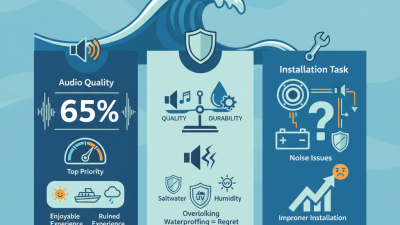
Choosing a marine stereo in 2026 requires more than comparing screen size and speaker power. Global buyers must consider boat type, climate, installation space, and local audio standards. A system suited to a calm freshwater lake may struggle on a salty coastal deck. Sunlight, spray, vibration, and temperature changes can affect performance over time.
This guide introduces the main marine stereo types available for international buyers. These include compact single-DIN receivers, modern touchscreen units, Bluetooth-focused systems, and networked audio platforms. Some models support Apple CarPlay, Android Auto, DAB, satellite radio, or multi-zone control. Others focus on simple buttons and reliable wireless streaming. A small cockpit receiver may need a sealed face, while a larger yacht may benefit from separate cabin and deck zones.
Real-world details matter. Check the unit’s water-resistance rating, UV protection, connector quality, and warranty coverage before ordering. Confirm voltage compatibility and available service support in the destination market. Marine-grade materials can reduce corrosion, but they cannot replace careful installation. Even a strong receiver may fail when cables remain exposed to standing water. That is easy to overlook.
The most expensive option is not always the most dependable. Buyers should compare verified specifications, supplier experience, and independent user feedback. Certification and marketing language can also vary between regions. This overview may not cover every vessel or future technology. However, it offers a practical starting point for selecting a marine stereo with clearer expectations and fewer costly surprises.
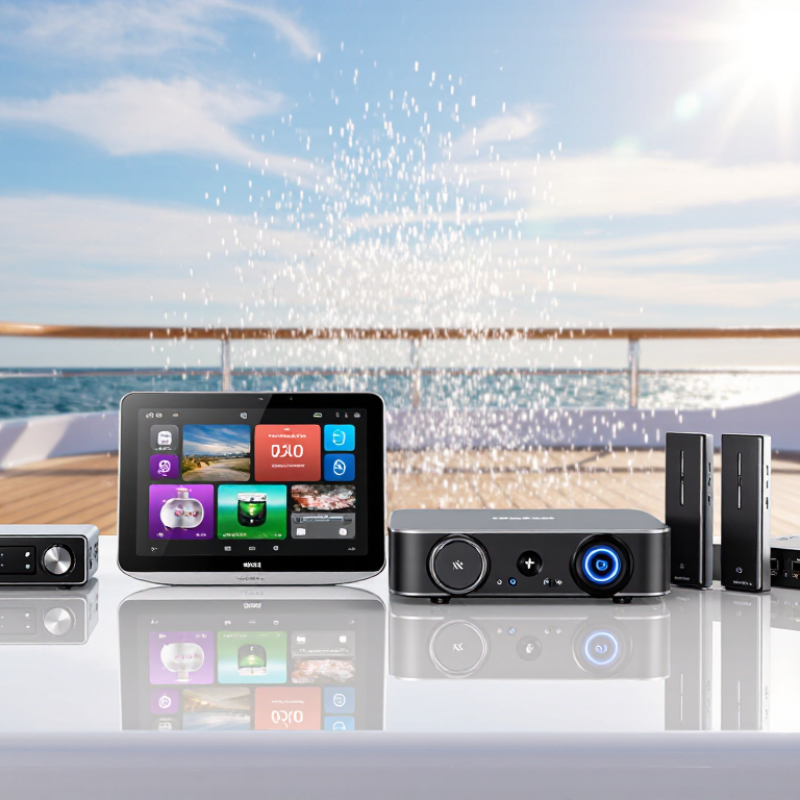
Marine stereo basics begin with the audio chain: a source unit, speakers, wiring, and sometimes an amplifier. Each part faces spray, sunlight, vibration, and sudden temperature changes. A marine-rated enclosure helps, but it does not make poor installation safe.
Sound matters underway.
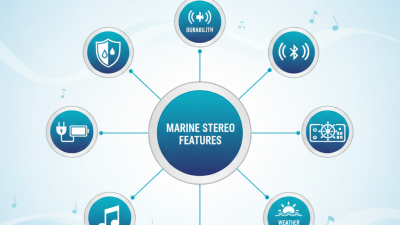
The National Marine Manufacturers Association’s 2023 Economic Impact Study reported $230 billion in U.S. recreational boating economic activity and supported 812,000 jobs. That scale reflects a large, demanding user base, not casual gadget buyers. Modern systems commonly support Bluetooth, USB playback, digital radio, and multi-zone control. These features let passengers hear music clearly near the helm, swim platform, or cabin.
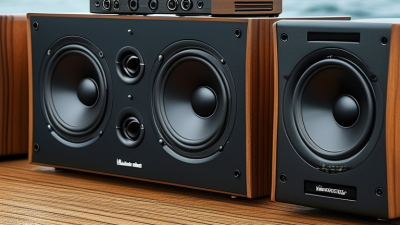
Speaker placement remains practical engineering. Coaxial speakers suit compact boats, while separate tweeters can improve clarity in open cockpits. Amplifiers add headroom, but excessive volume can mask alarms and crew communication. That trade-off deserves more attention.
The IEC 60529 standard defines IP protection ratings, often used when evaluating water and dust resistance. However, an IP rating does not confirm saltwater durability, acoustic quality, or connector reliability. Buyers should inspect cable sealing, fuse access, mounting depth, and service instructions. I once underestimated vibration; a secure-looking panel still loosened after repeated rough-water use. Marine audio design is improving, but installation mistakes remain surprisingly common.
Marine audio buyers in 2026 will mainly choose among fixed-mount stereos, portable units, and networked systems. Fixed-mount models suit helms, cockpits, and cabins exposed to spray. Look for IPX6 or IPX7 protection, conformal-coated circuits, and sealed connectors. Portable Bluetooth speakers provide flexible placement, but charging becomes inconvenient during long passages. They also offer weaker low-frequency performance on larger boats.
Networked marine stereos connect with chartplotters, amplifiers, and onboard control systems. This type supports zone-based listening, such as separate cockpit and cabin volume. It suits larger vessels and professional installations. However, compatibility deserves careful checking. A powerful stereo is not automatically a better system.
The 2024 NMMA Recreational Boating Statistical Abstract reported approximately 11.6 million registered recreational boats in the United States. That installed base supports steady replacement demand. ICOMIA’s global industry reports also show broad recreational boating activity across multiple regions, not only North America. Therefore, global buyers should check regional radio standards, voltage requirements, connector formats, and language settings. Digital radio support varies widely between markets. That detail is easy to miss.
A practical selection starts with the boat’s noise level and wiring condition. A compact 4-speaker setup may suit a day boat. Larger hulls often need external amplification and separate listening zones. Marine electronics market assessments from MarketsandMarkets identify connectivity and integrated control as continuing growth areas. Still, reports rarely reflect every real installation problem. Corrosion, poor grounding, and undersized wiring can undermine expensive equipment. Test the complete system before sailing.
Core marine stereo types available to global buyers in 2026, compared by typical continuous power output per channel.
Basic and DIN-format marine stereos commonly deliver around 15–25 W RMS per channel from their built-in amplifiers. Black-box source units normally require an external amplifier, while amplifier-led systems can provide approximately 50–100 W RMS per channel depending on the amplifier configuration. Actual performance varies by model, load impedance, installation, and regional specifications.
2026 Top Marine Stereo Types for Global Buyers
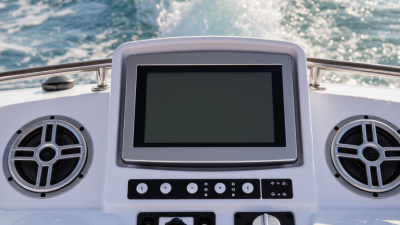
Marine stereos differ by installation space, control method, and exposure level. Single-DIN units suit compact dashboards and offer physical buttons, Bluetooth, USB, and basic zone control. Double-DIN touchscreen systems provide navigation integration, larger menus, and multi-zone audio. However, sunlight and wet fingers can reduce touchscreen accuracy. A larger display is not always better.
Hideaway or black-box stereos place the main electronics inside a protected compartment. They work well on open boats with remote controls near the helm or swim platform. Portable marine speakers and compact Bluetooth receivers offer flexible installation, but they usually provide less power and weaker zone management. Grand View Research estimates the global marine electronics market will continue growing through the decade, while Fortune Business Insights reports similar expansion patterns. These reports indicate stronger demand for connected, space-efficient systems. NMMA’s 2024 U.S. Recreational Boating Statistical Abstract recorded about 11.6 million registered recreational boats in 2023, showing the scale of potential replacement demand.
Tips: Check the IP rating under IEC 60529, not just the word “waterproof.” Confirm UV resistance, salt-spray protection, RMS power, and speaker impedance. For international buyers, verify AM/FM, DAB+, or regional radio compatibility. Test the control layout while wearing wet gloves. A technically advanced stereo can still fail as a daily tool when buttons are too small.
| Marine Stereo Type | Best Suited For | Key Distinguishing Features | Typical Audio and Connectivity | Installation and Space Requirements | Main Advantages | Important Trade-Offs |
|---|---|---|---|---|---|---|
| Single-DIN Digital Media Receiver | Powerboats, fishing boats, pontoons, and compact dashboards | Standard 180 × 50 mm chassis; physical buttons or a rotary control; strong resistance to moisture, salt spray, and ultraviolet exposure when properly rated. | Bluetooth audio, USB playback or charging, AM/FM or DAB/DAB+ depending on region, and auxiliary input. Many models provide preamp outputs for external amplifiers. | Fits a common single-DIN dashboard opening. Usually requires a mounting sleeve, wiring harness, and a marine-rated antenna. | Compact and widely compatible Good balance of cost, control simplicity, and upgrade flexibility. |
Limited screen area; usually no chartplotter-style navigation or large album-art display. |
| Double-DIN Touchscreen Receiver | Larger consoles and boats requiring a bigger user interface | Approximately 180 × 100 mm chassis with a large color touchscreen, graphical menus, camera support, and more room for audio-zone controls. | Bluetooth, USB, smartphone integration on compatible units, AM/FM or regional digital radio, multiple audio outputs, and inputs for reversing or onboard cameras. | Needs a double-DIN opening or a custom fascia. Adequate rear clearance and protection from direct water spray are essential. | Rich interface and expandability Easy access to playlists, audio zones, cameras, and system settings. |
Higher installation complexity; touchscreens can be harder to use with wet hands or gloves. |
| Mechless Flush-Mount Stereo | Open boats, center consoles, and highly exposed mounting locations | No CD mechanism, sealed face, low-profile design, and a simplified control layout. The absence of moving media parts improves tolerance to vibration. | Bluetooth streaming, USB, auxiliary input, and radio reception depending on configuration. Often includes zone control and amplifier outputs. | Available in compact round or rectangular formats. Flush mounting reduces protrusion and helps preserve dashboard space. | Simple and exposure-friendly Fewer mechanical parts, easy cleaning, and practical operation in wet environments. |
Usually has a smaller display and fewer advanced visual features than touchscreen receivers. |
| Bluetooth Audio Receiver | Small boats, tenders, kayaks with electrical systems, and buyers prioritizing phone streaming | Minimal user interface focused on wireless playback, compact dimensions, and low power consumption. Some versions include a wired remote or multifunction dial. | Bluetooth streaming and hands-free calling on selected designs; may include USB charging, auxiliary input, and basic radio functionality. | Typically easier to install than a full media receiver. Requires a stable 12 V DC supply and a suitable external or integrated antenna when radio is included. | Low complexity and efficient Fast access to phone libraries and streaming services without a disc drive. |
Limited local controls, display information, radio functions, and system expansion compared with larger receivers. |
| Marine Multimedia Receiver | Cruising boats, family vessels, and entertainment-focused helm systems | Large display, video playback, multiple input and output options, camera compatibility, and support for several audio zones. | Bluetooth, USB, smartphone media, auxiliary or composite video on some units, radio reception, camera inputs, subwoofer output, and multiple preamp channels. | Requires a spacious dashboard opening, careful cable routing, and protection from glare and direct spray. External amplifiers may be needed for larger speaker systems. | Most versatile entertainment hub Combines audio, video, camera monitoring, and multi-zone control in one interface. |
Higher power demand, installation cost, and user-interface complexity. |
| Remote-Controlled Hideaway Audio System | Boats with limited dashboard space or consoles exposed to frequent spray | The main electronics are installed in a protected compartment while a wired or wireless remote provides everyday control from the helm or cockpit. | Commonly supports Bluetooth, USB, auxiliary input, radio reception, multiple speaker zones, and external amplifier connections. | Requires a dry mounting location for the control module and a planned route for remote, power, speaker, and antenna wiring. | Flexible and space-saving Keeps sensitive electronics away from the wettest area while allowing convenient control. |
More wiring is required, and operation depends on the reliability and placement of the separate remote. |
| High-Power Multi-Zone Stereo | Large deck boats, wake boats, cruisers, and systems with many speakers | Designed to manage separate listening areas such as helm, cockpit, cabin, and swim platform, with independent volume or source adjustment. | Multiple zone outputs, subwoofer control, preamp connections, Bluetooth, USB, radio, and compatibility with external marine amplifiers. | Needs adequate ventilation, heavy-gauge power wiring, correctly sized circuit protection, and careful amplifier and speaker load planning. | Strong system scalability Supports high speaker counts and independent entertainment preferences across the boat. |
Greater current draw, more complex tuning, and increased installation demands. |
| OEM-Style Replacement Stereo | Boat owners seeking an original-equipment appearance and straightforward replacement | Designed to match existing dashboard styling, connector layouts, control positions, or factory speaker and amplifier arrangements where compatibility is available. | Usually includes Bluetooth and USB; features such as radio, steering-wheel-style controls, remote inputs, or factory amplifier support vary by installation. | May offer the simplest physical fit, but wiring compatibility, mounting depth, and factory control integration must be verified before purchase. | Clean appearance and easier integration Preserves the visual design of the helm and can reduce dashboard modification. |
Fewer universal mounting options and potentially less flexibility for future system expansion. |
Choosing a marine stereo starts with the boat, not the dashboard. A small open boat often suits a compact Bluetooth receiver with simple controls. It uses less space and supports quick phone pairing. For fishing boats, a hidden receiver with a wired remote can protect the main unit from spray. Keep the display away from direct sunlight when possible.
Larger cruisers may need a multi-zone system. It can control sound near the helm, cockpit, and cabin separately. Count your speakers before choosing the receiver. Four speakers may work on a small deck, while larger boats often need an amplifier and stronger wiring. Check the stereo’s water-resistance rating, UV protection, and saltwater resistance. Marine-rated speakers are essential, because ordinary car speakers can fail quickly in damp air.
Power supply also matters. A stereo may sound excellent at the dock but weaken when the battery voltage drops offshore. I would check cable size, fuse protection, and battery capacity with a qualified installer. Installation experience has taught me one uncomfortable lesson: owners often buy too much power and too little protection. That choice can create noise, heat, or unreliable starts. Leave room for future upgrades, but do not pay for features your boat cannot use. Test the controls while wearing wet gloves. That small detail is easy to miss.
Global marine stereo selection in 2026 depends on more than loudness. Buyers should match the system to the vessel, climate, and cruising habits. Salt spray, strong sunlight, and sudden temperature changes can damage ordinary audio equipment. Look for marine-rated construction, sealed controls, UV-resistant surfaces, and corrosion-resistant connectors. An IP rating helps, but it does not guarantee unlimited protection. Installation quality still matters.
Voltage compatibility is another important factor for international buyers. Confirm whether the stereo supports the vessel’s electrical system and expected voltage fluctuations. Regional radio bands may also differ, so check local broadcasting compatibility before ordering. Bluetooth, USB, and wireless networking improve convenience, especially when phones replace traditional media. However, wireless performance can weaken near metal structures or crowded marinas. A simple wired control option remains useful.
Audio output should fit the boat’s size, cabin layout, and engine noise. More power is not always better. Oversized systems can drain batteries quickly and create distortion when poorly installed. Buyers should review speaker impedance, amplifier efficiency, warranty terms, replacement access, and technical support in their region. Local certification requirements should be verified before import or installation. A common mistake is choosing attractive displays over readable controls. Wet fingers and bright sunlight can expose that weakness fast. No unit is perfect. A careful buyer should question every specification, including impressive waterproof claims.

| Sunday | CLOSED | |
| Monday | 9AM-12PM | 1PM-6PM |
| Tuesday | 9AM-12PM | 1PM-6PM |
| Wednesday | 9AM-12PM | 1PM-6PM |
| Thursday | CLOSED | |
| Friday | 9AM-12PM | 1PM-6PM |
| Saturday | 10AM-12PM | 1PM-6PM |
Please note that we are closed for lunch from 12PM-1PM daily.