
Top 10 Car Audio Manufacturers in China for Global Buyers
China’s car audio manufacturers serve buyers seeking speakers, amplifiers, head units, and complete vehicle sound systems. The opportunity is substantial, but choosing a supplier takes more than comparing prices. OICA’s 2023 production report recorded 93.5 million motor vehicles made worldwide, a reminder of the scale behind automotive component sourcing. Deloitte’s 2024 Global Automotive Consumer Study also examines consumers’ expectations for connected vehicle experiences, including technology that shapes the in-car environment.
Cabins are difficult listening spaces. Glass, upholstery, speaker placement, and road noise can change how a system sounds. Acoustics researcher Floyd Toole’s work on sound reproduction emphasizes that loudspeaker performance depends on the listening environment, not specifications alone. That insight matters when assessing a supplier’s engineering, tuning, and installation support. Small details matter. A neat product sheet cannot show how a system performs in a real vehicle.
This guide to the Top 10 Car Audio Manufacturers in China for Global Buyers introduces companies for closer evaluation. It considers product range, manufacturing capability, customization, quality documentation, and export experience. Buyers should verify certifications, sample performance, and after-sales terms directly with each manufacturer. The phrase car audio car audio may look repetitive, but it reflects a search term used by some buyers. Rankings are only a starting point; a supplier that fits one vehicle platform may not suit another.
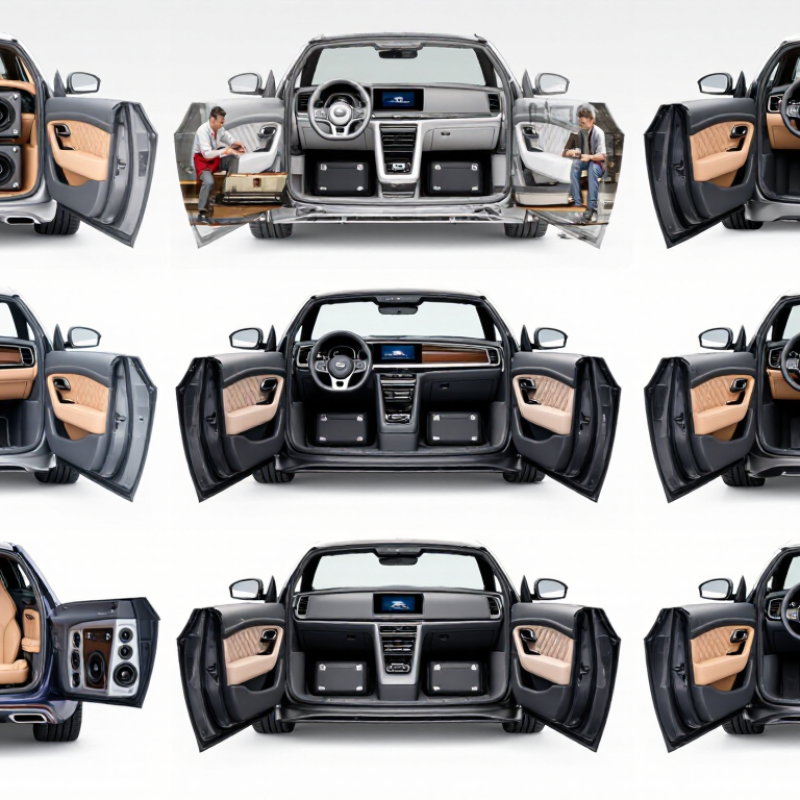
China’s Car Audio Industry and Its Role in the Global Market
China’s car audio industry plays a practical role in the global automotive supply chain. Manufacturers serve vehicle makers, aftermarket distributors, and specialist integrators across many regions. Their work can include speakers, amplifiers, head units, wiring assemblies, and complete audio systems. A buyer may find several production stages coordinated within one sourcing network. That can shorten communication loops and make design changes easier to discuss. It does not guarantee better quality.
Factories often support both original-equipment programs and export-focused products. They may adapt enclosure dimensions, connector layouts, user interfaces, and packaging to meet a buyer’s specifications. Production capability matters, but so do acoustic testing, traceable component sourcing, and consistent inspection records. A sample that sounds clear in a quiet showroom may behave differently inside a hot, noisy vehicle. Real-world validation matters. Buyers should review test methods, request production samples, and clarify how defects are handled before placing larger orders. Trade-offs remain: lower unit costs can come with longer coordination or tooling timelines. China’s strength is not simply manufacturing volume; it is the ability to combine engineering, sourcing, and scale. Yet supplier claims still need independent checking. A polished catalogue is not proof.
Top 10 Car Audio Manufacturers in China for Global Buyers – China’s Car Audio Industry and Its Role in the Global Market
Buyer-focused overview of key product segments and sourcing considerations. Rows describe industry capabilities, not individual companies or a ranked list of manufacturers.
| No. | Product or Capability Segment | Typical Scope | Global Buyer Considerations | Role in the Supply Chain |
|---|---|---|---|---|
| 1 | Loudspeakers | Automotive speakers, including woofers, tweeters, and full-range units | Check acoustic performance, dimensions, impedance, materials, and vehicle-fit requirements. | Core transducer components for factory-installed and aftermarket audio systems. |
| 2 | Audio Amplifiers | Multi-channel and dedicated automotive power amplifiers | Review output ratings, thermal behavior, electrical protection, and compatibility with the vehicle system. | Drives speakers and supports upgrades to system power and performance. |
| 3 | Digital Signal Processing (DSP) | Audio processing, equalization, crossover, and time-alignment functions | Confirm software tools, tuning workflow, input/output configuration, and integration needs. | Enables system tuning and coordination between audio sources, amplifiers, and speakers. |
| 4 | Head Units and Receivers | In-dash receivers and multimedia units for vehicle audio and connectivity | Verify vehicle fit, regional radio bands, interfaces, language support, and applicable software requirements. | Provides audio-source control and user-facing connectivity in many aftermarket installations. |
| 5 | Subwoofers and Enclosures | Low-frequency drivers and matched or custom-fit enclosures | Assess enclosure volume, usable cabin space, power handling, and installation constraints. | Adds low-frequency output to vehicle sound systems. |
| 6 | Wiring and Installation Accessories | Harnesses, connectors, mounting parts, and audio installation accessories | Check connector pinouts, wire specifications, materials, and vehicle-specific fitment. | Supports electrical connection and physical installation of audio equipment. |
| 7 | Microphones and Hands-Free Audio Components | Microphones and related components used for calls and voice input | Evaluate voice pickup, noise handling, connection type, and placement requirements. | Provides voice input for compatible in-vehicle communication and control systems. |
| 8 | OEM Integration and Customization | Vehicle-specific design, tuning, mechanical adaptation, and production support | Ask for engineering scope, validation plans, change control, and responsibility boundaries. | Connects component manufacturing with automaker or vehicle-program requirements. |
| 9 | Quality and Compliance Support | Documented quality processes, product testing, and market-specific compliance support | Request current certificates, test reports, traceability records, and confirmation of applicable regulations. | Helps buyers assess consistency and prepare products for intended markets. |
| 10 | Export and Contract Manufacturing | Production, private-label arrangements, packaging, and international shipment coordination | Confirm minimum order quantities, lead times, inspection terms, intellectual-property safeguards, and shipping responsibilities. | Supports overseas distributors and buyers sourcing finished products or components. |
Market context: China serves as a major global manufacturing base across electronics and automotive supply chains. Its car-audio supply network includes component makers, system integrators, and contract manufacturers; supplier capabilities and export readiness vary, so buyers should verify product specifications, certifications, and production capacity directly.
Related Posts
-
Top Apple Car Stereo Brands for Global Buyers
-
How to Install a Car Stereo Step by Step?
-
Exploring the Future of Car Multimedia Player Technology Enhancements and Trends
-
China Top 10 Car Music System Manufacturers?
-
What is Car Audio and How to Choose the Best System?
-

Unlocking the Future of Driving: How Car Multimedia Players are Transforming In-Car Entertainment