How to Choose a Marine Stereo in 2026
Choosing a marine stereo in 2026 is about more than finding a unit that fits the dashboard. Salt spray, vibration, bright sunlight, and changing weather can challenge equipment during ordinary use. The right system should suit your boat, your listening habits, and the conditions it will face. Small details matter.
This guide explains how to compare marine stereo features without getting lost in product jargon. It covers water and dust resistance, display visibility, Bluetooth and other connection options, speaker compatibility, and power requirements. You’ll also learn what to check before installation, including mounting dimensions, wiring, and the stereo’s documentation. A feature list can look impressive, but it is only useful if the system works with your existing setup. Check the manufacturer’s specifications rather than relying on a product photo or a vague sales claim.
Your needs may be simpler than you expect. A small fishing boat used for short trips may not need the same setup as a larger vessel used all day. Think about where the controls will sit, whether passengers can reach them safely, and how clearly you can hear music over engine noise. That last point is easy to overlook. There is no perfect choice for every boat, and advertised ratings do not tell the whole story. Use this guide to weigh practical trade-offs, ask better questions, and choose a marine stereo that fits your vessel—not just the newest feature list.
Define Your Boat’s Audio Needs and Listening Environment
Before choosing a marine stereo, picture a normal day aboard: passengers talking in the cockpit, wind crossing the bow, and engine noise rising underway. A system that sounds loud at the dock may become hard to hear offshore. Wind changes everything. Decide where music matters most—at the helm, in the cockpit, or below deck—and whether separate listening zones would help. Note the distance between speakers and listeners, too; a large open deck needs different coverage from a compact cabin.
Match the system to exposure and use. Salt spray, damp storage, direct sun, and vibration all affect equipment life, so check marine-use ratings and mounting options. Think about phone connections, radio reception, and whether controls remain easy to reach with wet hands. Then test the sound at realistic volume, with the engine running if possible. A common misstep is chasing bass before checking speech clarity.
Keep crew conversation and safety alarms audible. The U.S. Coast Guard’s 2023 Recreational Boating Statistics recorded 564 recreational-boating deaths nationwide, a sober reminder that music must not compete with essential communication.
I would leave some volume headroom; maximum volume is rarely comfortable for long.
Check Marine-Grade Protection for Water, Salt, and Sun Exposure
A marine stereo faces more than an occasional splash. Spray can reach the console, salty air settles on controls, and sunlight heats the display for hours. Look for a clearly stated marine-use rating, not just a water-resistant label. Check what the rating covers: the front panel, buttons, connectors, or the entire unit may have different protection.
Salt is persistent. It dries into a fine crust around knobs and seams, then attracts moisture again. Sealed controls and corrosion-resistant materials can help, but they do not make a stereo maintenance-free. After a rough day on the water, wipe the face with a damp cloth and inspect exposed connections. Small details matter. A covered USB port is useful only if its cover closes securely.
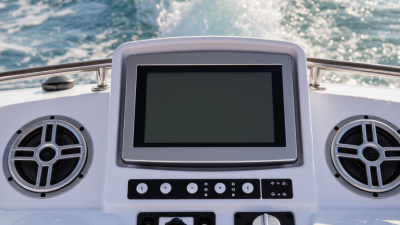
Sun exposure deserves equal attention. A display that looks bright in a shaded shop may be hard to read beneath noon glare. If possible, view it outdoors at an angle similar to your helm. Check whether the screen remains legible and whether the face feels unusually hot after direct exposure. No rating guarantees years of perfect performance; installation and care still count. I have learned that the easiest unit to clean is often the one that gets cleaned regularly. That sounds obvious, but it is easy to neglect after docking.
How to Choose a Marine Stereo in 2026: Check Marine-Grade Protection for Water, Salt, and Sun Exposure
For marine use, look for an enclosure with a verified IEC 60529 water-ingress rating. IPX5 protects against water jets, IPX6 against powerful water jets, and IPX7 against temporary immersion in up to 1 meter of water for 30 minutes. Water resistance does not automatically guarantee protection from salt corrosion or ultraviolet exposure, so also check for corrosion-resistant materials, sealed controls, UV-stable plastics, and a display designed for direct sunlight.
Compare Connectivity, Controls, and Audio Features
How to Choose a Marine Stereo in 2026
A marine stereo should match your boat, not just your playlist. Start with connectivity. Bluetooth is convenient for phones, while USB can provide steadier playback during long trips. Wi-Fi support may improve streaming, but it can depend on a reliable onboard network. Check whether the unit supports your phone’s operating system and remembers multiple devices. I have found that simple pairing matters more than impressive specifications.
Controls deserve practical testing. A bright display should remain readable under direct midday sunlight. Physical buttons are useful when your hands are wet or the boat is moving sharply. A wireless remote can help from the helm or swim platform, but its range needs checking around metal structures. Touch controls look clean. They are not always easy to use.
Audio features should suit the space. Look for adjustable equalization, separate volume zones, and balance controls for cockpit and cabin speakers. Loudness alone is not quality. A stereo that reduces distortion at higher volume usually feels better during engine noise. Water resistance matters, but installation still determines long-term reliability. I once underestimated cable protection, and corrosion appeared sooner than expected. That mistake changed my checklist. Review fuse access, ventilation, and connector sealing before buying. No setup is perfect.
Evaluate Installation, Expandability, and Long-Term Support
How to Choose a Marine Stereo in 2026
Evaluate Installation, Expandability, and Long-Term Support
A marine stereo should fit your boat, not just your dashboard. Measure cutout depth, wiring space, and panel thickness before ordering. During installations, I have seen a shallow console turn a simple replacement into hours of rewiring. Check whether the unit needs a separate amplifier, adapter, or waterproof fuse holder. Clear instructions matter when salt air has already stiffened old cables.
Expandability protects that investment. Look for outputs for additional speakers, a subwoofer, and a second audio zone. Wireless control is convenient, but physical buttons remain useful with wet hands. Confirm compatibility with your phone, chart plotter, and onboard network. Test the planned layout on paper. I once placed controls too close to a throttle, and that small mistake became annoying every trip.
Long-term support deserves equal attention. Choose a manufacturer offering downloadable manuals, firmware updates, replacement parts, and responsive technical service. Ask how warranty claims work before installation. A stereo can sound excellent yet become difficult to maintain after one failed connector. Saltwater exposes weak seals quickly. Inspect the face, cable exits, and mounting hardware for corrosion-resistant construction. No choice is perfect. Budget limits may force compromises, but document them and leave room for future upgrades. Your 2026 purchase should remain serviceable when the boat’s wiring changes.